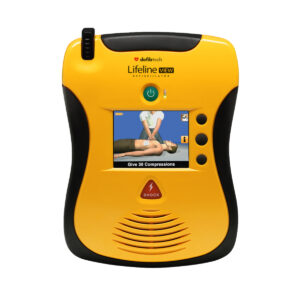
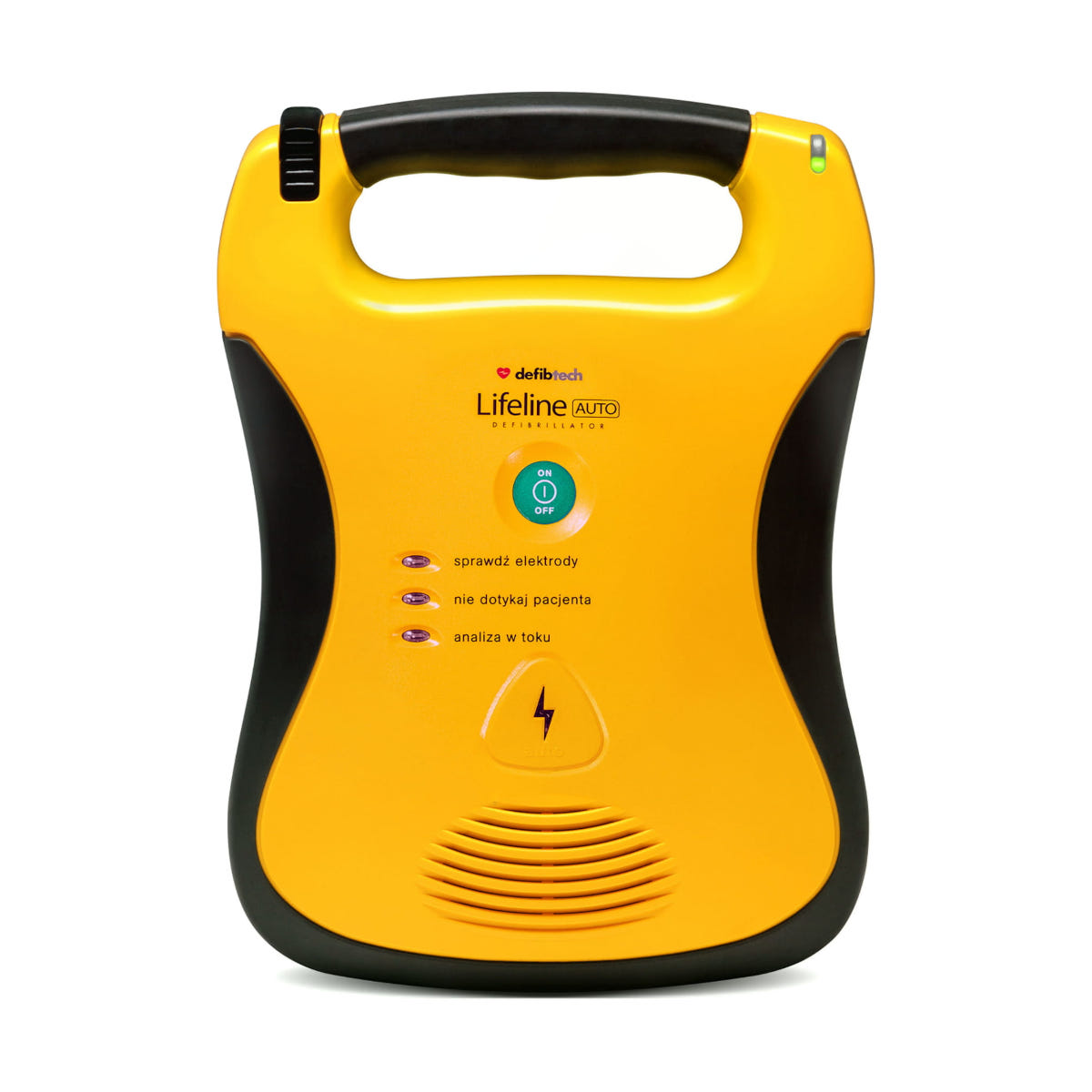
The Defibtech Lifeline AED defibrillator in its automatic version is an easy-to-use AED for public places, companies, schools and sports facilities. When the device detects a rhythm requiring defibrillation, it warns of the shock and delivers it itself – the rescuer does not have to press a button; it is enough that nobody touches the casualty.
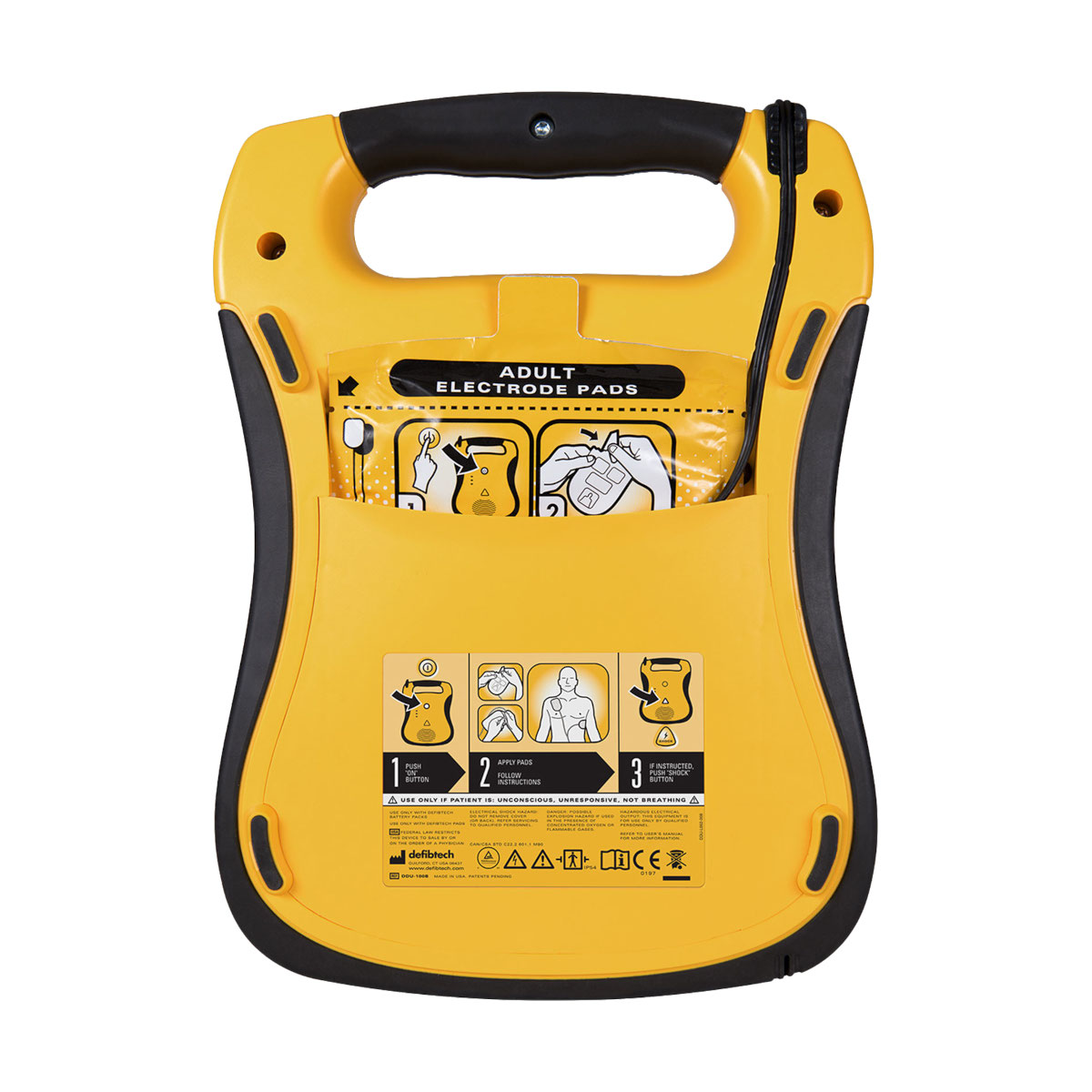
The device has only two buttons – power and shock – and voice prompts guide the rescuer through the successive steps: from applying the electrodes, through heart rhythm analysis, to resuscitation. The built-in metronome sets the chest compression rate, and the defibrillator tells you how much time is left until the end of the CPR cycle.
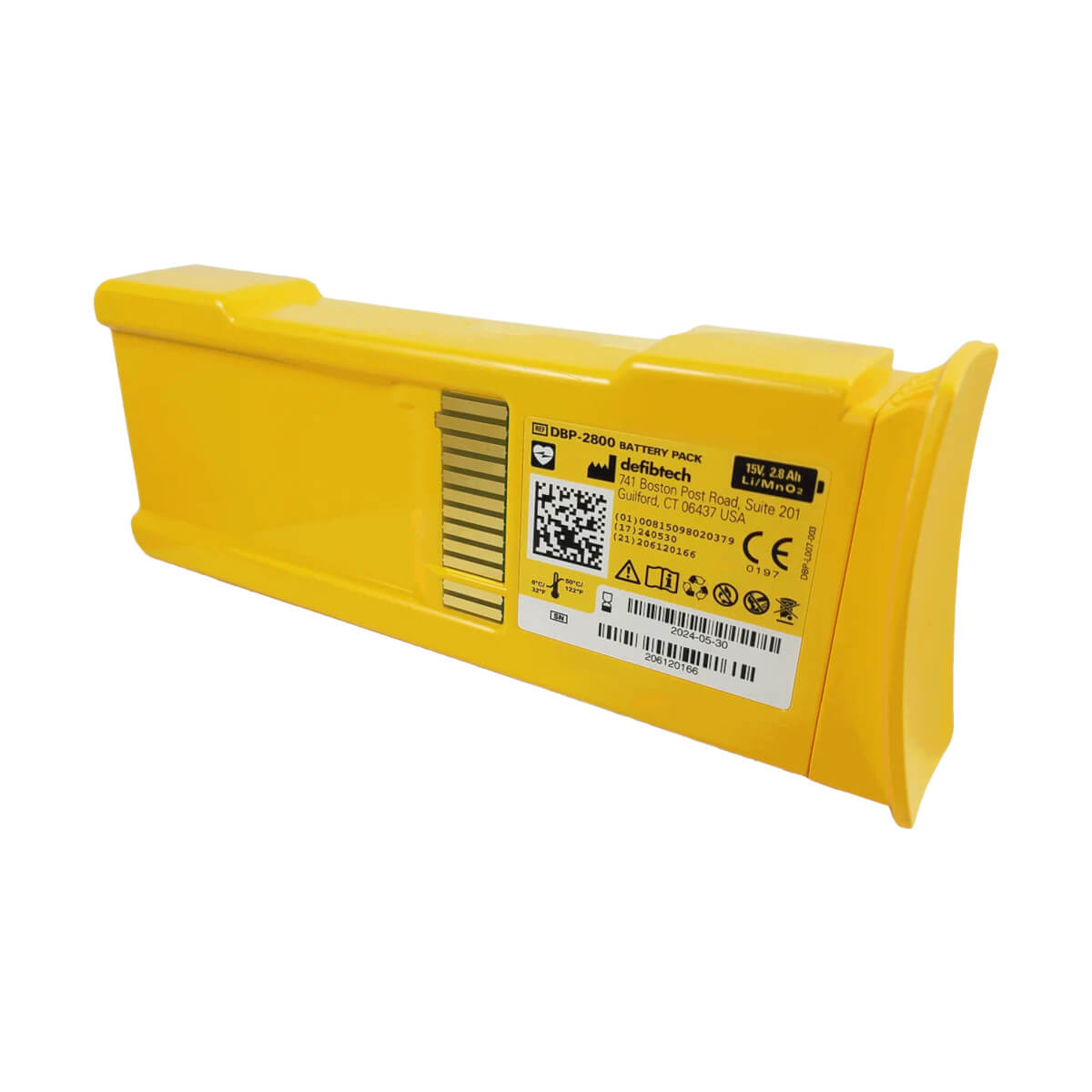
Power is provided by the Defibtech Lifeline 7-year battery (300 shocks or 16 hours of operation), and the status indicator is powered by a separate 9V battery. The defibrillator performs daily self-tests, and a fault is signalled by an LED on the housing. The housing with no moving parts has reinforced, non-slip sides, an IP54 rating and withstands a 1 m drop. Events and the ECG record are saved to a memory card. The Defibtech Lifeline AED defibrillator should be kept in a visible, signposted place so that anyone can reach it quickly.
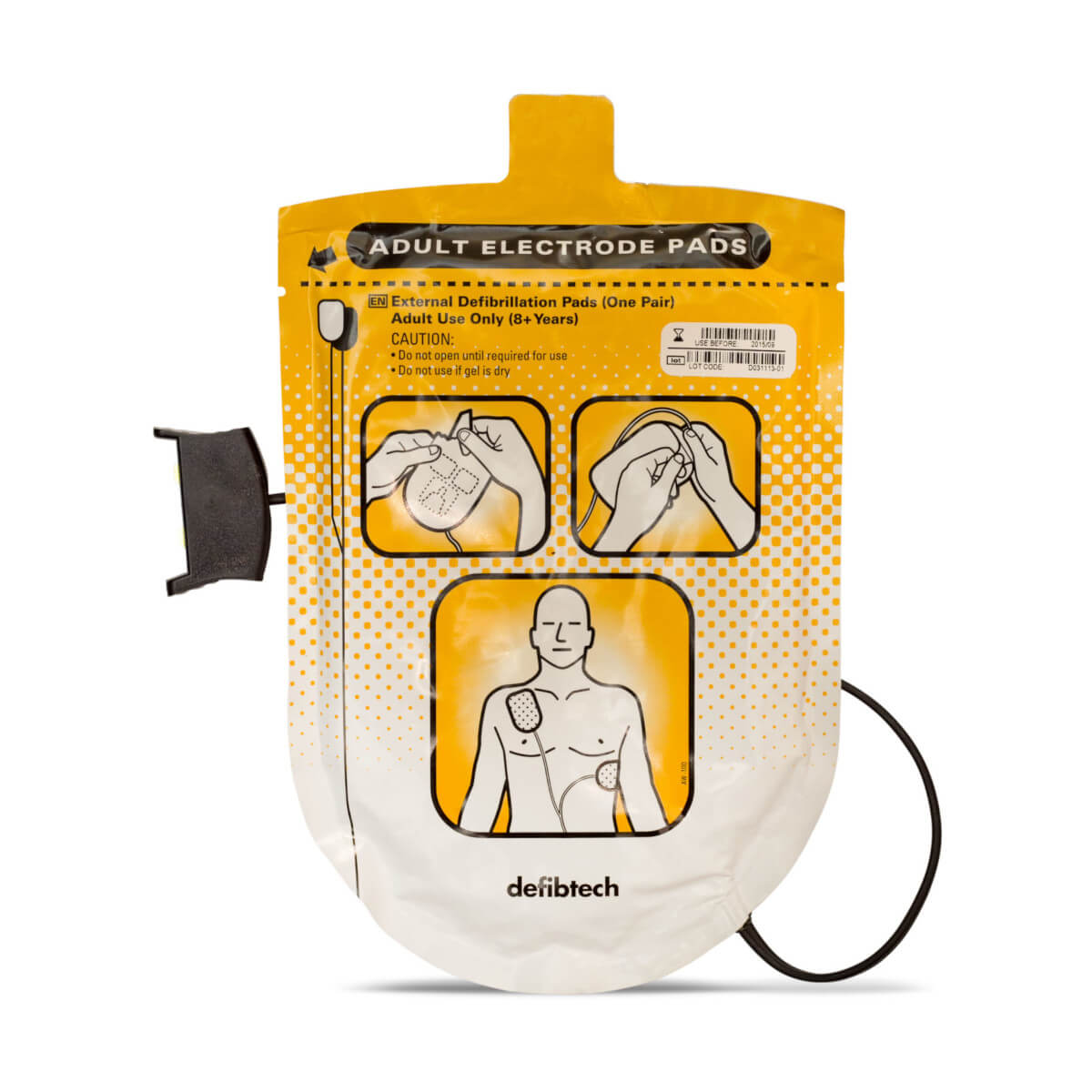
For children, use the paediatric electrodes for Lifeline AED – the defibrillator then delivers 50 J instead of 150 J. Spare adult electrodes for Lifeline AED have a shelf life of approx. 24 months. The Defibtech Lifeline AED defibrillator in its automatic version works well wherever the device may be used by bystanders.
Why the Defibtech Lifeline AED defibrillator in its automatic version?
The automatic version relieves the rescuer of the decision to press the shock button. It is a good choice where the AED may be used by an untrained person who might hesitate under stress. A battery with a 7-year standby life means less frequent replacement, and an 8-year warranty means predictable maintenance costs. The Defibtech Lifeline AED defibrillator needs little attention: just keep an eye on the status LED and the battery and electrode expiry dates.
If you prefer to keep control over the shock, choose the Lifeline AED semi-automatic. You will find other models in the category AED defibrillators and accessories.
An AED ready at all times
A defibrillator only helps if it works and can be reached quickly. Appoint a person to regularly check the readiness indicator and the expiry dates of the battery and electrodes. When someone is unresponsive and not breathing normally, call 112, start chest compressions and ask for an AED to be brought – action taken by a bystander can decide whether the casualty survives.
Read more in the chapter Automated external defibrillator (AED).
Frequently asked questions (FAQ)
What is the difference between the automatic and semi-automatic versions?
The automatic one delivers the shock itself after a warning; in the semi-automatic one the rescuer presses the shock button.
Does the Lifeline AED have a metronome?
Yes – the metronome sets the compression rate, and voice prompts guide you through CPR.
Can it be used on a child?
Yes – with DDP-200P paediatric electrodes the defibrillator delivers 50 J.
How long does the battery last?
The 7-year battery is enough for 300 shocks or 16 hours of operation; the status indicator is powered by a separate 9V battery.