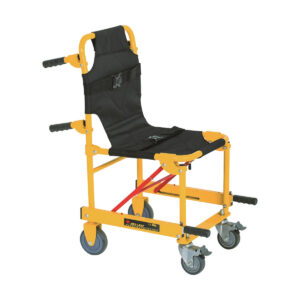
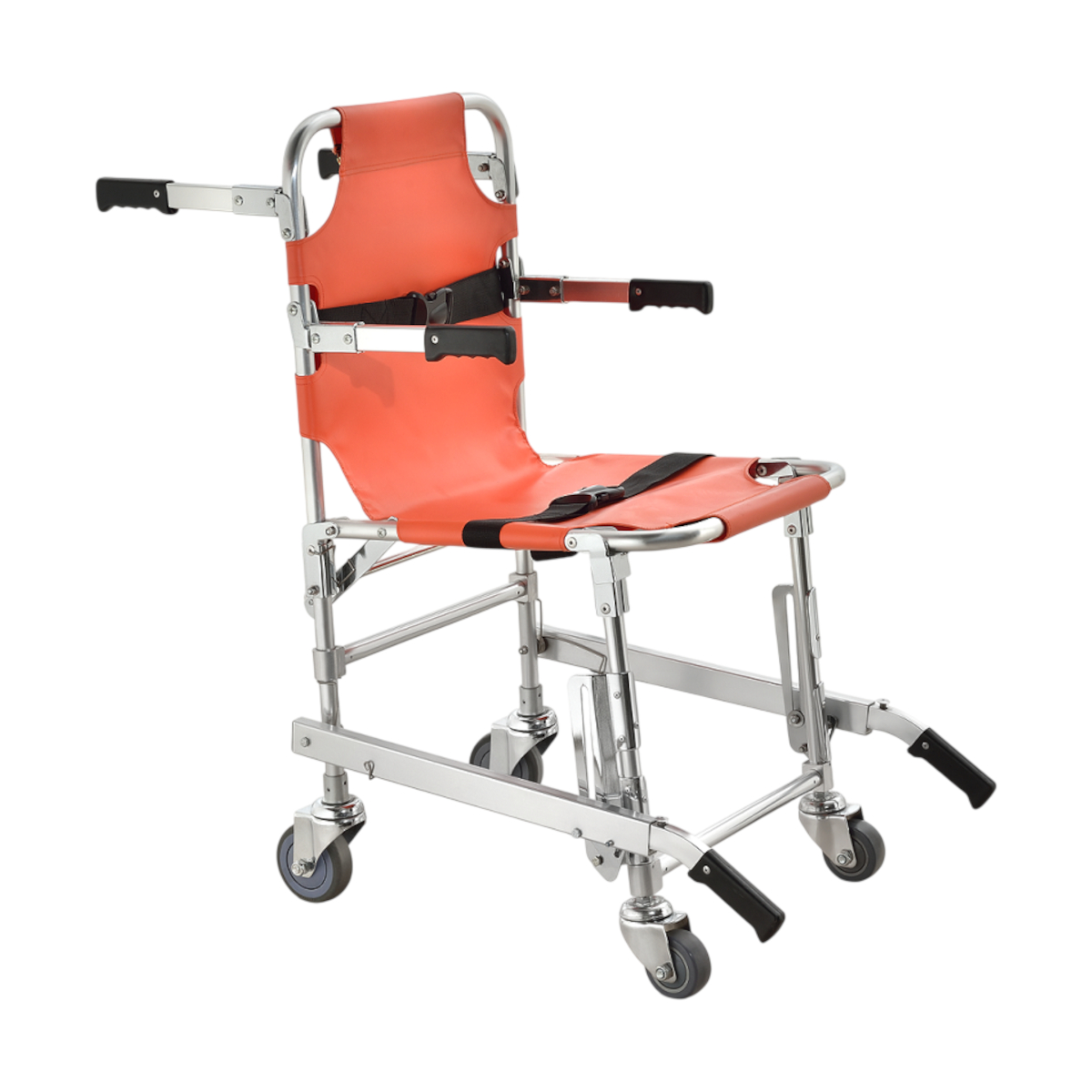
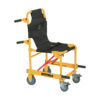
Stair evacuation chair is a simple, proven tool for evacuating people who cannot walk down stairs on their own – the elderly, people with reduced mobility, casualties with a lower limb injury or patients weakened by illness. In multi-storey buildings the stairwell is usually the most difficult part of the escape route: the lift may be out of service, corridors are narrow and a conventional stretcher cannot easily be turned on a landing.
The high-strength aluminium alloy frame weighs approx. 10 kg yet carries a load of up to approx. 159 kg. The chair is operated by two people: one guides it from the back using the folding rear handles, the other holds the extendable telescopic front poles. The weight is spread over both ends of the frame, and the evacuee remains in a stable sitting position throughout.
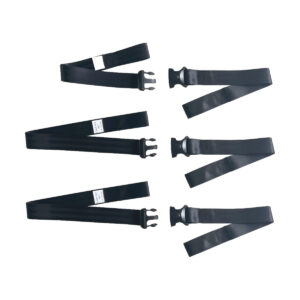
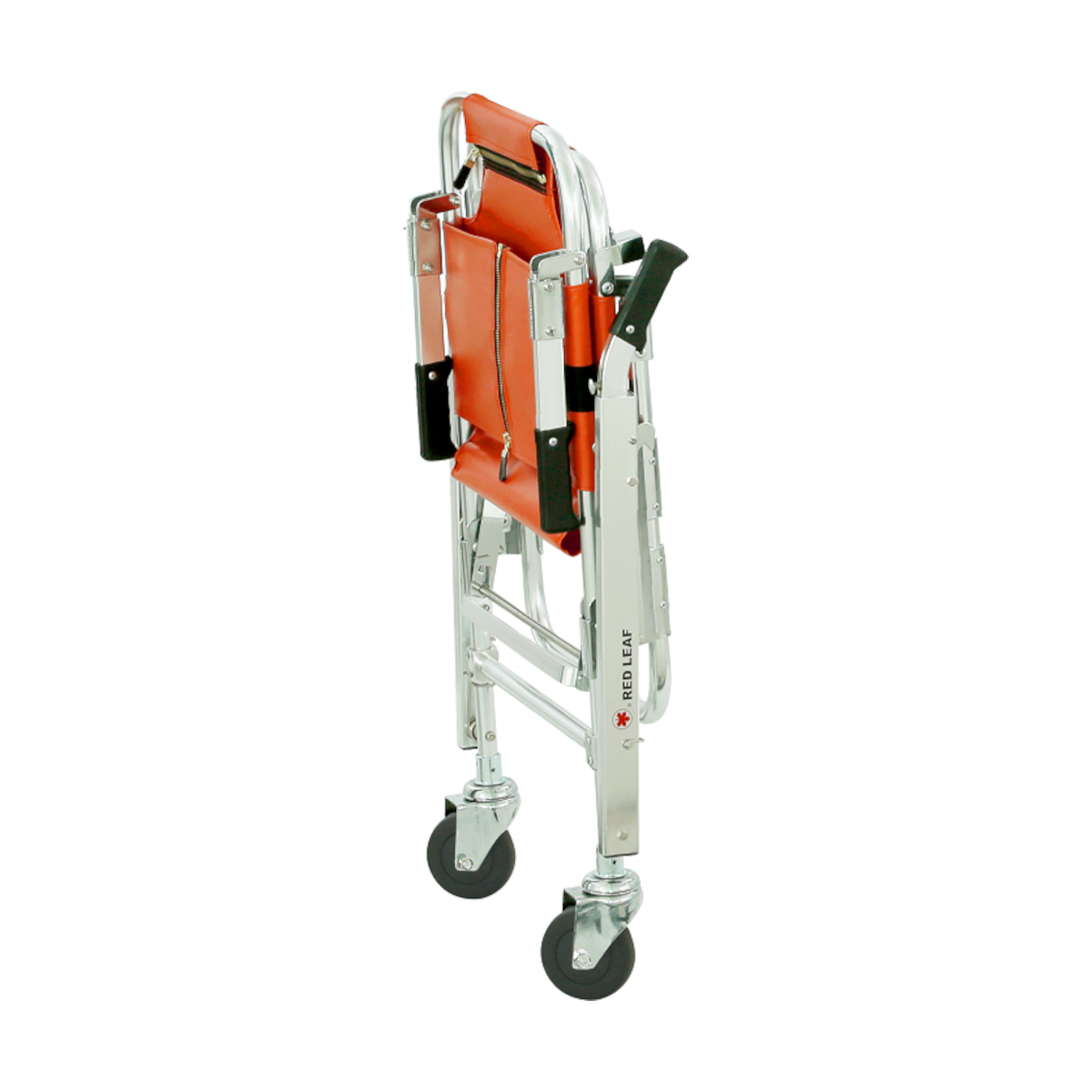
Unfolded, the stair evacuation chair measures approx. 105 × 52 × 91 cm and folded only approx. 91 × 52 × 16 cm – it can be hung next to the stairwell entrance, kept in the security room or carried in a rescue vehicle. Four wheels make it easier to move along corridors and up ramps, and safety belts stabilise the evacuee so they do not slip while going down the steps.
Smooth surfaces and a simple design make cleaning and disinfection after each use easy. It is a solution for public offices, schools, office buildings, hotels, medical and care facilities and workplaces whose evacuation plan must take people with reduced mobility into account.
Why does a stair evacuation chair work well in a stairwell?
Carrying a person down stairs on a stretcher usually takes several people and plenty of room to turn on the landings. The chair has a much smaller footprint, so it fits typical stairwells in office and residential buildings, and two trained people are enough to operate it. Stair evacuation chair should be hung in a permanent, signposted place by the stairwell so that nobody has to look for it when the alarm goes off. A stair evacuation chair is best practised with the building staff before it is really needed.
For many evacuees – especially older people – a sitting position is more comfortable and less stressful than lying on their back. The chair also lets you keep eye contact with the person being carried and monitor whether they are feeling worse.
However, you need to know its limitations: a sitting position is not suitable for unconscious casualties, those with a suspected spinal injury or those who need resuscitation. In such situations a stretcher is the right choice – in our shop you will find evacuation and immobilisation equipment, including sheet, basket and scoop stretchers.
Evacuating a person with reduced mobility – what to remember?
Before you set off, assess the safety of the escape route and the condition of the person you are carrying: are they conscious, short of breath, in severe pain or bleeding? Fasten the belts, warn the evacuee before every movement and agree simple commands with the other operator before going onto the stairs. Guide the chair calmly, step by step, without jerking.
Evacuation is a team task – bystanders often have to be involved to help. We describe how to give them clear tasks and direct their actions in our guide on getting bystanders involved as helpers – the same rules work when evacuating a building.
Frequently asked questions (FAQ)
How many people are needed to operate the evacuation chair?
Two – one guides the chair by the rear handles, the other holds the telescopic front poles. This division gives control over the chair on every step.
What is the chair's maximum load?
The load capacity is approx. 159 kg, with the chair's own weight approx. 10 kg.
Can the chair be wheeled on flat ground?
Yes – four wheels let you roll it along a corridor or up a ramp. On stairs the chair is carried by two people.