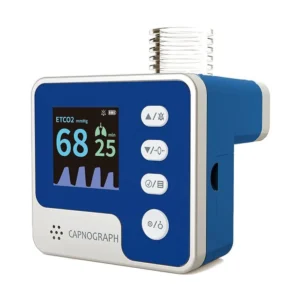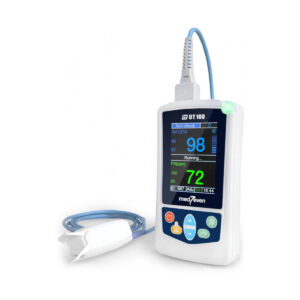
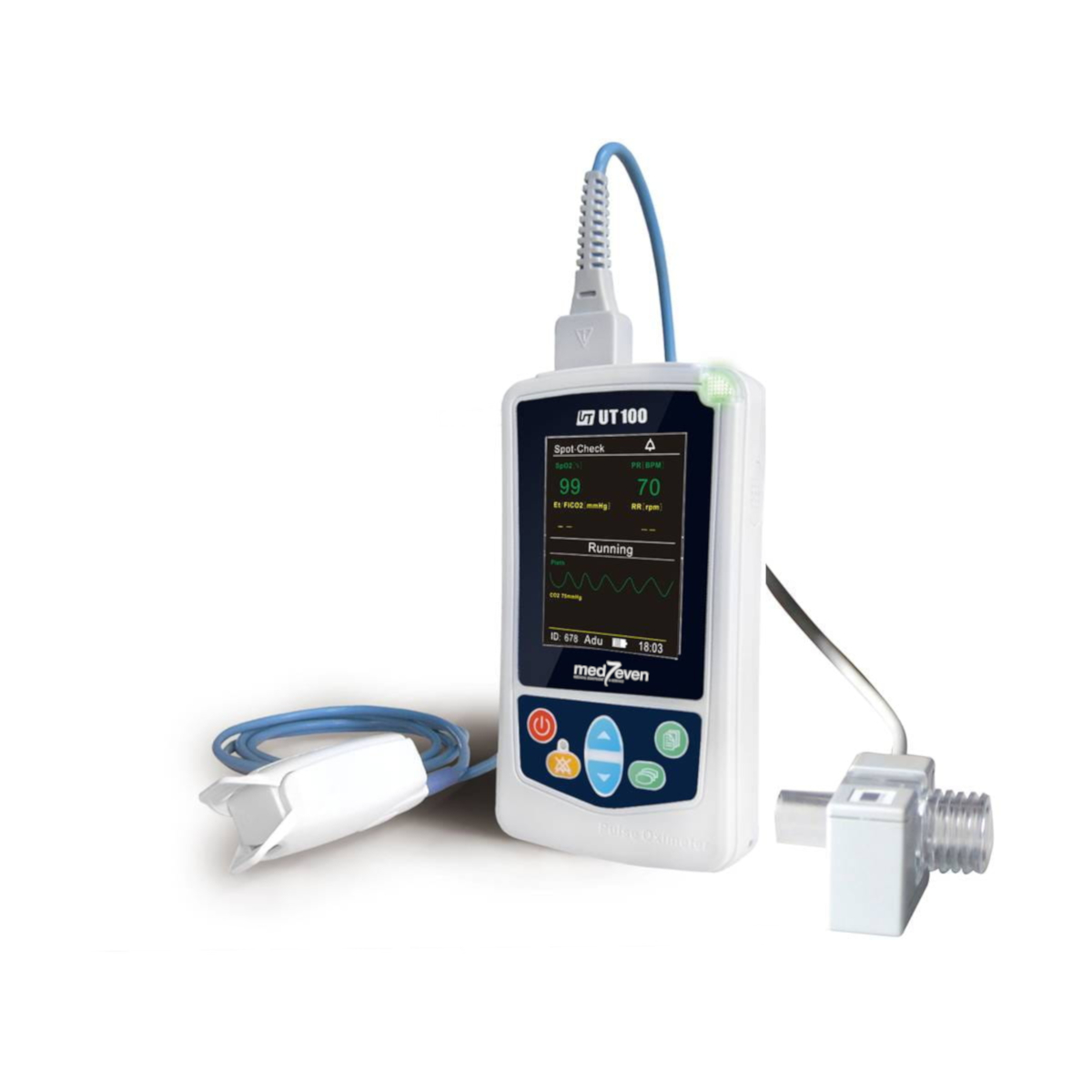
The portable UT100C capnograph with pulse oximeter is a monitor for continuous or spot-check, non-invasive measurement of vital signs: end-tidal carbon dioxide (EtCO2), inspired CO2 (FiCO2), respiratory rate (RR), saturation (SpO2) and pulse rate (PR).
The capnograph has a clear colour TFT LCD display with 6 screen layouts – with trends or dynamic waveforms. It works in two modes: continuous and spot checking. It records trends of measured parameters with export to a computer, has visual and audible alarms with adjustable limits, and allows a patient ID to be entered.
Power comes from replaceable rechargeable batteries (up to 20 hours of operation) or AC mains – the adapter is included. The device is small and light, so it works well in hospitals, clinics, home care and medical transport. The UT100C capnograph is intended for medical personnel.
The UT100C capnograph has a version without capnography – the UT100 pulse oximeter. Another model is the Contec CA10M capnograph.
Why the UT100C capnograph?
EtCO2 shows the effectiveness of ventilation faster than saturation, and during resuscitation it lets you assess compression quality and detect return of circulation. That is why capnography is the monitoring standard in emergency medicine.
Other devices can be found in the category vital signs monitoring.
Assessing the casualty
Vital sign measurements complement but do not replace the basic assessment: check responsiveness, open the airway and assess breathing for 10 seconds. If the casualty is not breathing normally, call 112 and start CPR – do not waste time on measurements. With a conscious casualty, take a history and watch for any change in their condition.
Read more in the article Assessing the casualty.
Frequently asked questions (FAQ)
What parameters does the capnograph measure?
EtCO2, FiCO2, respiratory rate, SpO2 and pulse.
How long does it run on batteries?
Up to 20 hours; it can also be powered from AC mains.
Can data be exported?
Yes – trends can be exported to a computer.