
Improving the rescue skills of volunteer firefighters
Volunteer firefighters are often the first to reach casualties in road accidents, fires and incidents in the field. Our refresher training for OSP units lets you practise, in realistic conditions, what matters most in such situations: controlling massive bleeding and treating injuries.
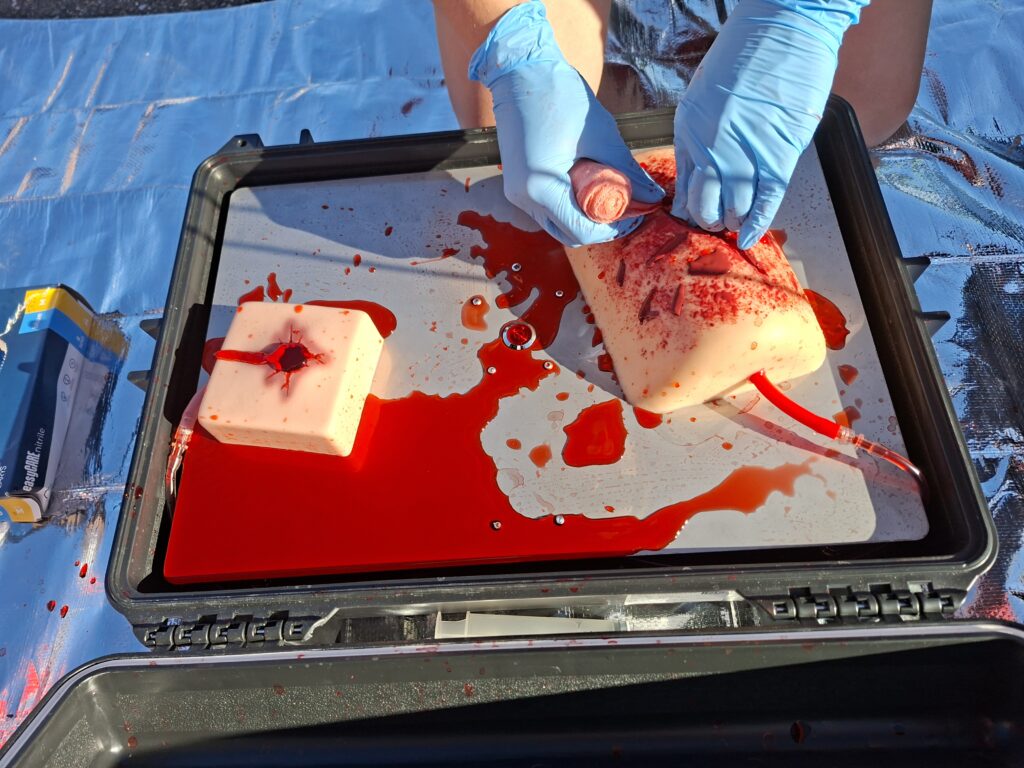
We practise on bleeding trainers, using tourniquets recommended by TCCC and individual and haemostatic dressings. We train in small groups – up to 20 people, and with more than 12 Participants the course is always run by at least two Instructors – at the fire station or at the Ratowacze training centre.
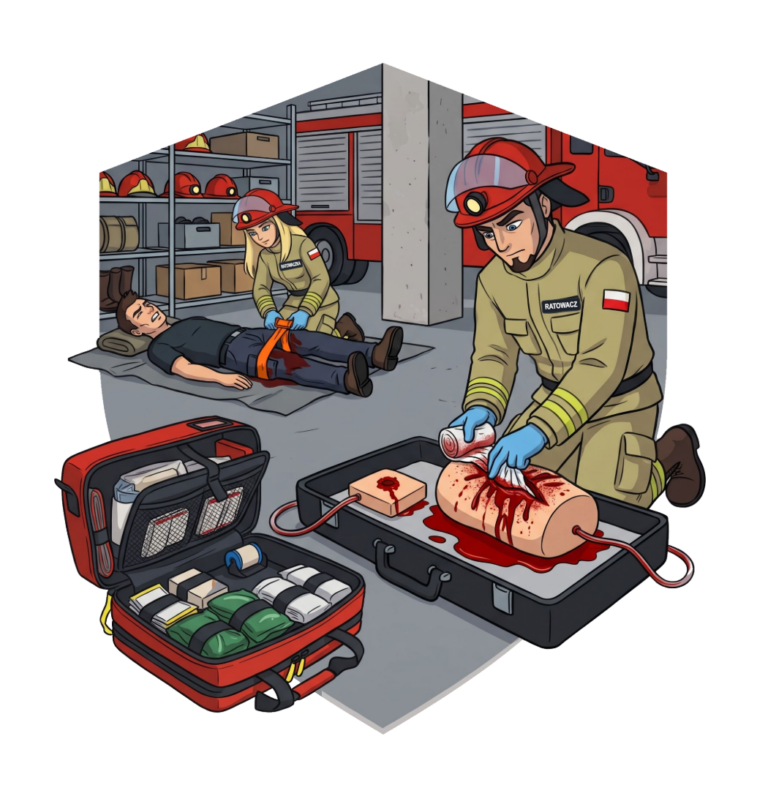
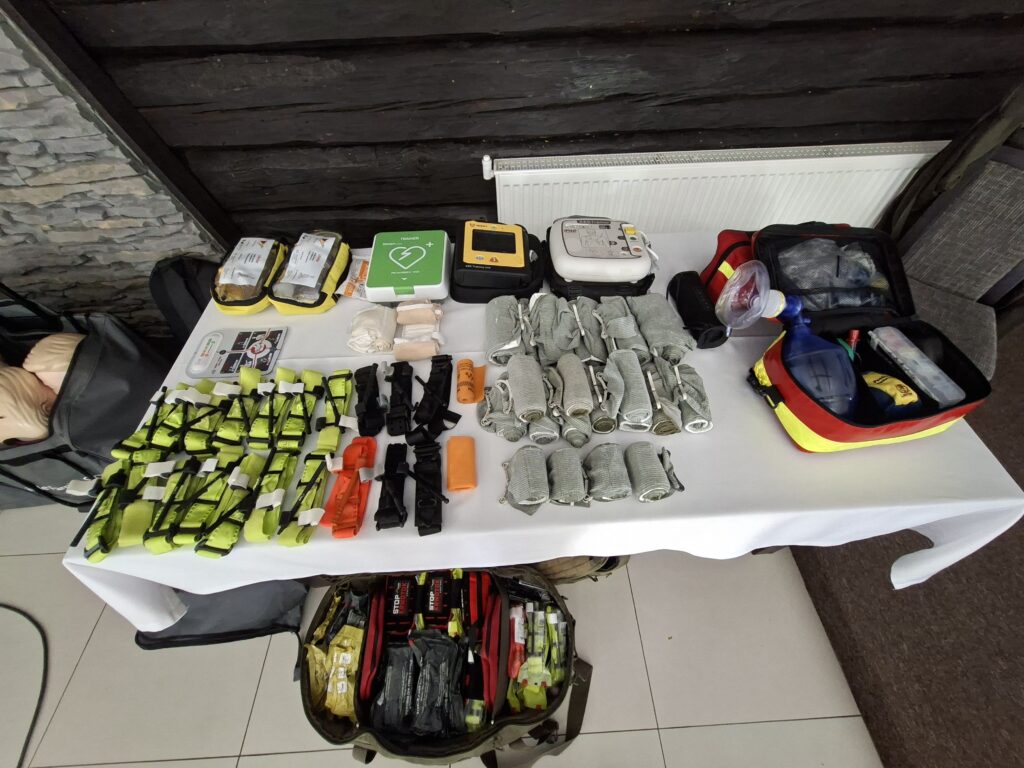
First aid – Practical Massive Bleeding Control workshops
| Training programme | Topic | What will you learn? | Format | Time |
| Using tourniquets to control massive bleeding | 1. You will learn how tourniquets recommended by TCCC (CAT gen 7, SAM XT, SOFT gen 5) work, how they are built and their technical specifications. 2. We explain in detail when to reach for a tourniquet and go through the golden rules of applying it. 3. You will also learn which critical mistakes and details to keep in mind so that the tourniquet works 100% effectively. | Lecture | 10 min | |
| 1. You will go through intensive training in applying tourniquets correctly (CAT gen 7, SAM XT, SOFT gen 5) in various rescue scenarios. 2. You will learn to apply a tourniquet to yourself and to a casualty in seconds, avoiding the most common mistakes under time pressure. 3. You will master the technique of making and effectively using improvised tourniquets from available materials. | Practical workshops | 45 min | ||
| Advanced wound care with individual dressings | 1. We will discuss how professional individual dressings (Israeli, Olaes, A.C.T.) are built – what they consist of and how exactly their pressure mechanisms work. 2. We explain in which situations and on which parts of the body they should be used to stop bleeding effectively. | Lecture | 10 min | |
| 1. You will practise applying dressings correctly on your own at different wound sites. You will learn to use the components hidden inside them (such as gauze or film) and master techniques for applying effective pressure to a wound under time pressure. | Practical workshops | 30 min | ||
| Controlling bleeding with “wound packing” on semi-automatic trainers | 1. You will train in packing wounds in hard-to-reach places using realistic bleeding trainers. During the workshops you will practise precisely locating the source of bleeding, packing gauze into the wound and maintaining effective direct pressure until the bleeding has completely stopped, followed by dressing the casualty. | Practical workshops | 45 min | |
| Using haemostatic dressings to control bleeding | 1. You will learn to use various types of haemostatic dressings correctly. 2. You will learn how to maintain the right time and force of manual pressure after applying each of these products in order to stop severe bleeding. | Practical workshops | 20 min | |
| Treating open chest injuries | 1. You will learn how serious a threat to life pneumothorax is and how open chest wounds affect the mechanics of breathing. 2. You will learn how specialist vented chest seals are built and how they work, and learn to recognise situations in which they must be used immediately. | Lecture | 10 min | |
| 1. You will learn to use vented chest seals from different manufacturers efficiently and to cope when you do not have dedicated dressings at hand. 2. You will master the procedure for monitoring the casualty and learn how to respond effectively if their breathing suddenly gets worse. | Practical workshops | 30 min | ||
| Treating abdominal injuries and wounds | 1. You will learn the rules for safely treating deep abdominal wounds, with particular focus on open wounds with evisceration. 2. You will learn the key rules of conduct in such cases, which mistakes you must avoid and why protection against cooling and infection is so important in this situation | Lecture | 10 min | |
| 1. You will practise techniques for safely covering and stabilising abdominal wounds using suitable dressing materials. 2. You will learn how to protect an evisceration correctly without putting direct pressure on the organs and how to position the casualty to minimise pain and tension of the abdominal wall. | Practical workshops | 30 min | ||
| Customisation | This offer describes a standard course covering the basics everyone should know. If you have other needs, want the course to cover specific situations and ways of responding that interest you – let us know, we will adapt the offer especially for you and create a training tailored to your needs! | |||
| Introduction | Did you know that in massive bleeding it is the first seconds and your reaction that decide whether the casualty survives? The ability to stop the bleeding quickly and effectively is fundamental – what counts is a correct assessment of the situation and immediate, effective action, which can genuinely save the casualty's life. On our course you will learn to control massive bleeding quickly, consciously and effectively. |
| Duration | 4 training hours |
| Course format | In-person training at a location chosen by the Client. If you do not have your own training room, we can also organise the course at the Ratowacze training centre. |
| Group size | Small training groups – up to 20 people (with more than 12 Participants the course is always run by at least two Instructors), to keep the workshops practical |
| Goal | During the course you will discover the strength to help others, gain practical skills in controlling massive bleeding and the Power to save lives, which will stay with you forever. |
| Course fee for individuals: PLN 350 |
| We always try to adapt the course to your individual needs. If you are looking for a course for your Company/Organisation we will prepare a dedicated offer for you. In that case, fill in the form below – based on your answers we will prepare an offer tailored to your needs. |
| Above all, REAL SKILLS – after the course you will feel ready to act in an emergency. |
| Personal certificate of completion – confirming the skills you have gained. |
| Minimum boredom, maximum practice: We focus on exercises, simulations and real-life scenarios. |
| Experienced instructors: Passionate people with a lifesaver's heart who can pass on knowledge in an accessible way. |
| Friendly atmosphere: We teach without stress, building your self-confidence. |
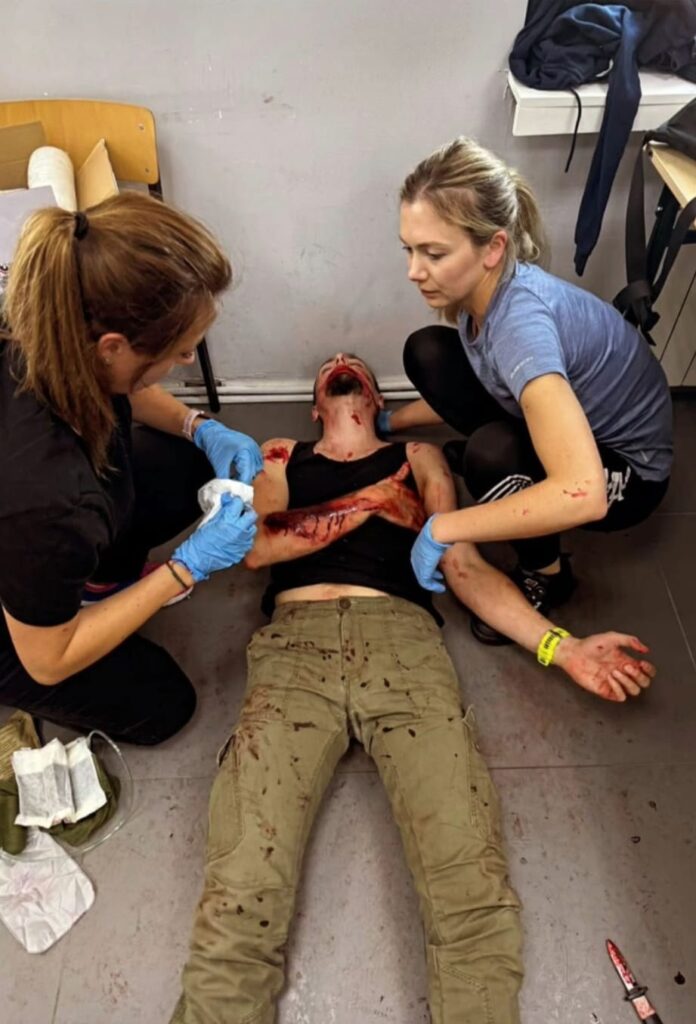
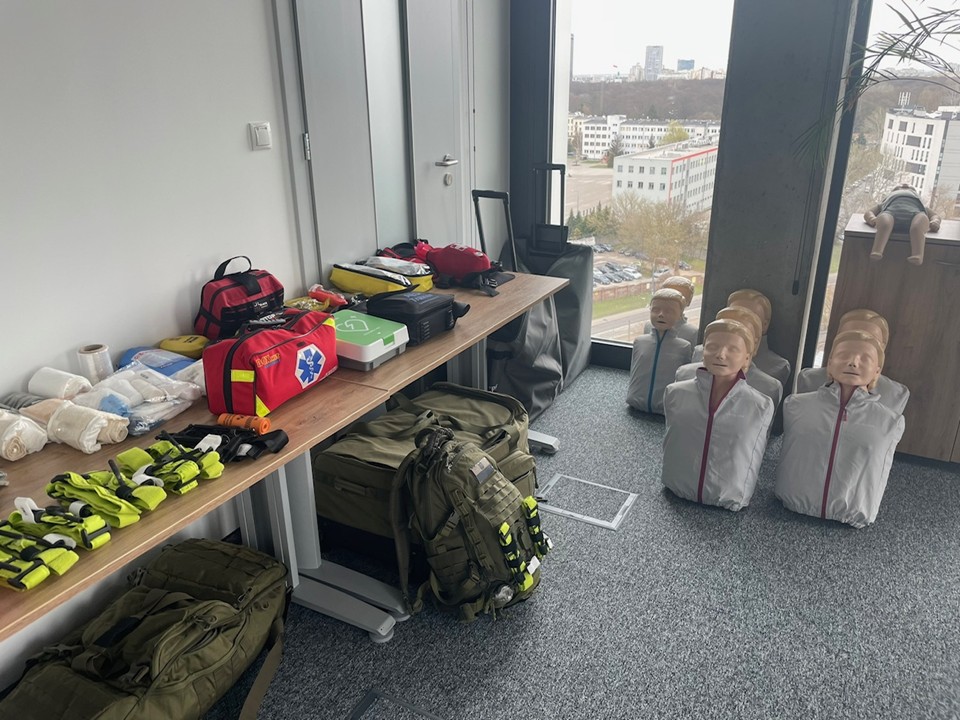
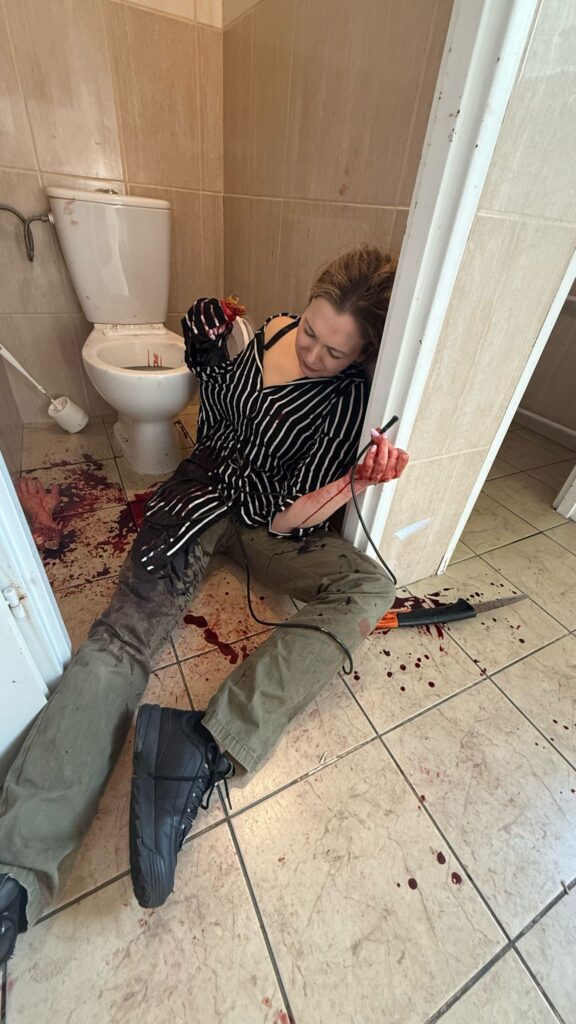

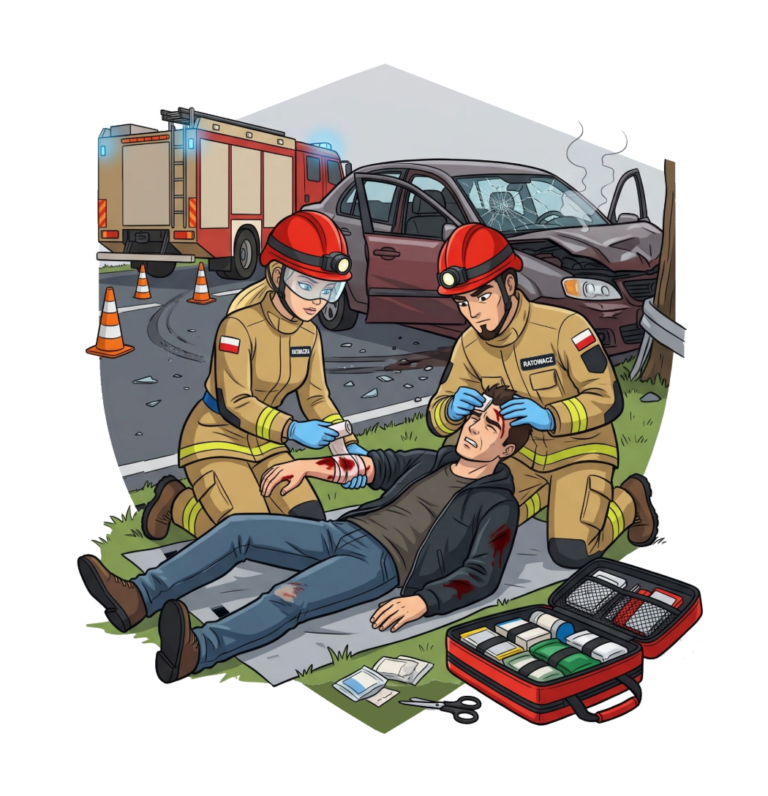
First aid for injuries – a course full of practice
| Training programme | Topic | What will you learn? | Format | Time |
| Head injuries | 1. We will discuss the most common head injuries, including deep facial wounds, eye injuries and nosebleeds. 2. You will learn how to deal safely with an embedded tool or foreign object so as not to make the casualty's condition worse. 3. You will learn what to do in the case of serious head injuries. | Lecture | 10 min | |
| 1. You will master the correct techniques for applying dedicated dressings to wounds and injuries of the head. 2. You will learn safe methods of stabilising foreign objects and dealing with eye injuries. 3. You will practise quick and effective ways of stopping nosebleeds in simulated conditions. | Practical workshops | 30 min | ||
| Chest injuries | 1. We will discuss examples of severe chest wounds, including gunshot and stab wounds. 2. We explain the procedures for each of these cases step by step, so that your actions are conscious and confident. 3. You will learn about the biggest danger associated with a chest injury – we will discuss what a pneumothorax is. | Lecture | 10 min | |
| 1. You will practise applying specialist chest seals to chest wounds efficiently. 2. You will learn to assess the casualty's breathing and vital functions under time pressure. 3. You will master techniques for positioning the patient to make breathing easier with chest injuries. | Practical workshops | 30 min | ||
| Abdominal injuries | 1. We will discuss examples of abdominal wounds caused by accidents, blows, stabbings and gunshots. 2. You will learn the correct approach in complex situations such as evisceration or suspected internal bleeding. 3. We explain the reasons behind specific rescue procedures and how to choose dedicated dressings. | Lecture | 10 min | |
| 1. You will learn techniques for safely covering and protecting abdominal wounds using suitable dressings. 2. You will master the procedure for evisceration without putting pressure on the organs. 3. You will practise positioning the casualty correctly to reduce abdominal tension and pain. | Practical workshops | 30 min | ||
| Limb injuries | 1. You will learn about the full range of possible limb injuries – from bruises, sprains and dislocations to complex closed and open fractures. 2. You will learn how to proceed step by step in each of these cases and the reasons behind specific rescue procedures. | Lecture | 15 min | |
| 1. You will master techniques for safely immobilising limbs using professional splints and improvised materials. 2. You will learn to follow procedures for complex open fractures, focusing on stabilisation and minimising pain. 3. You will learn how to immobilise an injured limb correctly, which tools and materials to use (from professional splints to improvised means) and how to effectively protect the casualty from making the injury worse. | Practical workshops | 45 min | ||
| Burns | 1. You will learn the degrees and extent of thermal, chemical and electrical burns and how to treat the casualty depending on the type of burn. 3. You will learn how to deal safely with clothing that has melted into or stuck to the skin and how to prevent the wound from becoming infected. | Lecture | 15 min | |
| 1. You will practise the correct techniques for applying specialist hydrogel dressings to different parts of the body. 2. You will master procedures for protecting the casualty from cooling (hypothermia) after prolonged cooling of the wound. 3. You will practise safely dressing extensive burns, with infection protection, in simulated conditions. | Practical workshops | 45 min | ||
| Customisation | This offer describes a standard course covering the basics everyone should know. If you have other needs, want the course to cover specific situations and ways of responding that interest you – let us know, we will adapt the offer especially for you and create a training tailored to your needs! | |||
| Introduction | Did you know that when someone suffers a serious injury, the speed of your action and your attitude can be crucial for the casualty's health and emotional comfort? During the course we present examples of the injuries you are most likely to encounter and what to do before the emergency services arrive. We will show you a range of individual dressings designed for particular types of wounds and injuries, depending on where they are on the casualty's body. |
| Duration | 4 training hours full of practical workshops. |
| Course format | In-person training at a location chosen by the Client. If you do not have your own training room, we can also organise the course at the Ratowacze training centre |
| Group size | Small training groups – up to 20 people, to keep the workshops practical |
| Goal | During the course you will discover the strength to help others, gain practical skills in giving first aid for injuries and the Power to save lives, which will stay with you forever. |
| Course fee for individuals: PLN 200 |
| We always try to adapt the course to your individual needs. If you are looking for a course for your Company/Organisation we will prepare a dedicated offer for you. In that case, fill in the form below – based on your answers we will prepare an offer tailored to your needs. |
| For course Participants | Above all, REAL SKILLS – after the course you will feel ready to act in an emergency. |
| Personal certificate of completion – confirming the skills you have gained. | |
| Why choose our course? | Minimum boredom, maximum practice: We focus on exercises, simulations and real-life scenarios. |
| Experienced instructors: Passionate people with a lifesaver's heart who can pass on knowledge in an accessible way. | |
| Friendly atmosphere: We teach without stress, building your self-confidence. |
Training for OSP – controlling massive bleeding
OSP training in controlling massive bleeding is 4 hours of intensive exercises. Firefighters learn:
- To apply tourniquets recommended by TCCC (CAT gen 7, SAM XT, SOFTT gen 5) – to themselves and to a casualty, including under time pressure, and to make improvised tourniquets.
- To use individual dressings – Israeli, Olaes and A.C.T. – making use of their pressure components.
- Wound packing on bleeding trainers.
- To use haemostatic dressings and maintain the right pressure.
- To treat open chest injuries.
Injury care – refresher training
The second module is 4 hours of exercises in treating injuries: of the head (including facial wounds, eye injuries and foreign objects), chest (stab and gunshot wounds, pneumothorax), abdomen (including evisceration) and limbs – from sprains and dislocations to closed and open fractures. Participants practise applying dedicated dressings, immobilisation and positioning the casualty to make breathing easier or reduce pain.
You will see the full programmes of both courses after clicking the “Massive Bleeding Control” or “Wound and Injury Care” tile above.
Refresher training for firefighters – also with funding
OSP units often fund refresher training in rescue skills from external sources – including grant programmes of foundations such as the Orlen Foundation. For an interested unit we can prepare a dedicated training programme – one that matches the scope of the project you want to carry out – together with a detailed offer you can use when submitting your application. The training is a good complement for firefighters with KPP qualifications – it lets them regularly consolidate and expand their skills in practice.
We run the training at the fire station or at the Ratowacze training centre in Kraków, Niepołomice or Kielce. We are constantly expanding our training base – more permanent locations are planned. We train at Clients' premises all over Poland. The equipment we train on – tourniquets, dressings and haemostatics and R1 rescue kits – you will find in our shop.
In massive bleeding, a bystander taking action can decide whether the casualty survives, and a volunteer firefighter is very often that first person at the scene. Read more in the article How to control massive bleeding.
Ask about training for your volunteer fire brigade (OSP)
Describe your brigade's needs – we will prepare a programme and an offer based on them. If you are applying for funding, mark it in the form – we will prepare a programme tailored to the scope of your project.
Frequently asked questions (FAQ)
How long is the OSP training?
Each module – controlling massive bleeding and treating injuries – lasts 4 training hours. The modules can be combined into one day.
How many people can take part?
We train in groups of up to 20 people. There are a maximum of 12 Participants per Instructor, so with a larger group the course is always run by at least two Instructors.
Can the training take place at the fire station?
Yes – we come with trainers and equipment. We can also organise the training at the Ratowacze training centre.
Will you prepare a programme for a funded project?
Yes – we will prepare a dedicated training programme matching the scope of the project you want to carry out, together with a detailed offer you can use when submitting your application.
Which tourniquets do we practise with?
With tourniquets recommended by TCCC: CAT gen 7, SAM XT and SOFTT gen 5, and we also teach how to make improvised tourniquets.