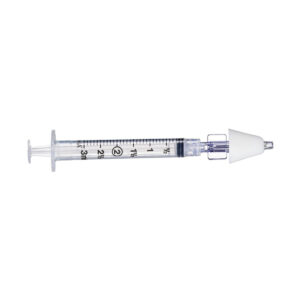
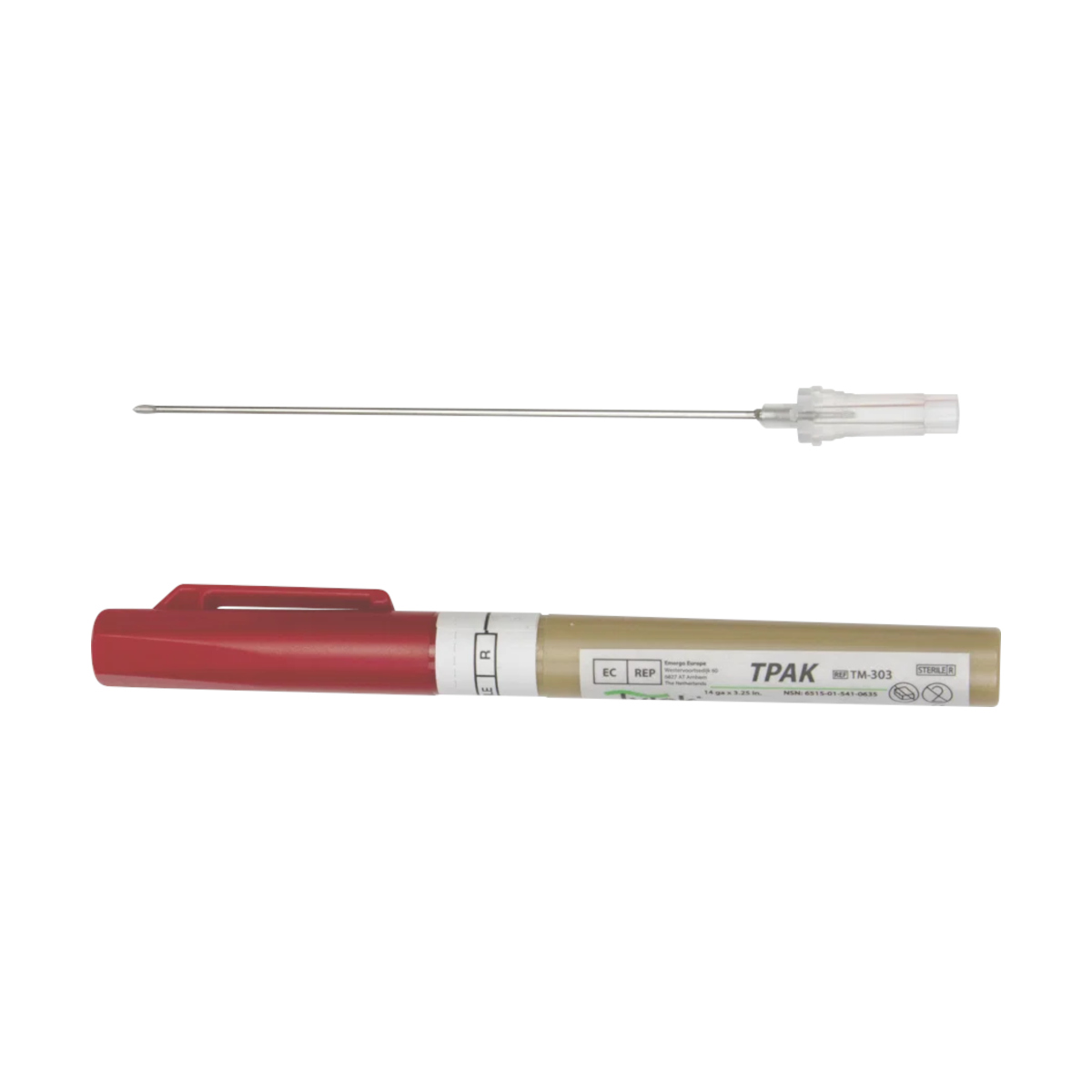
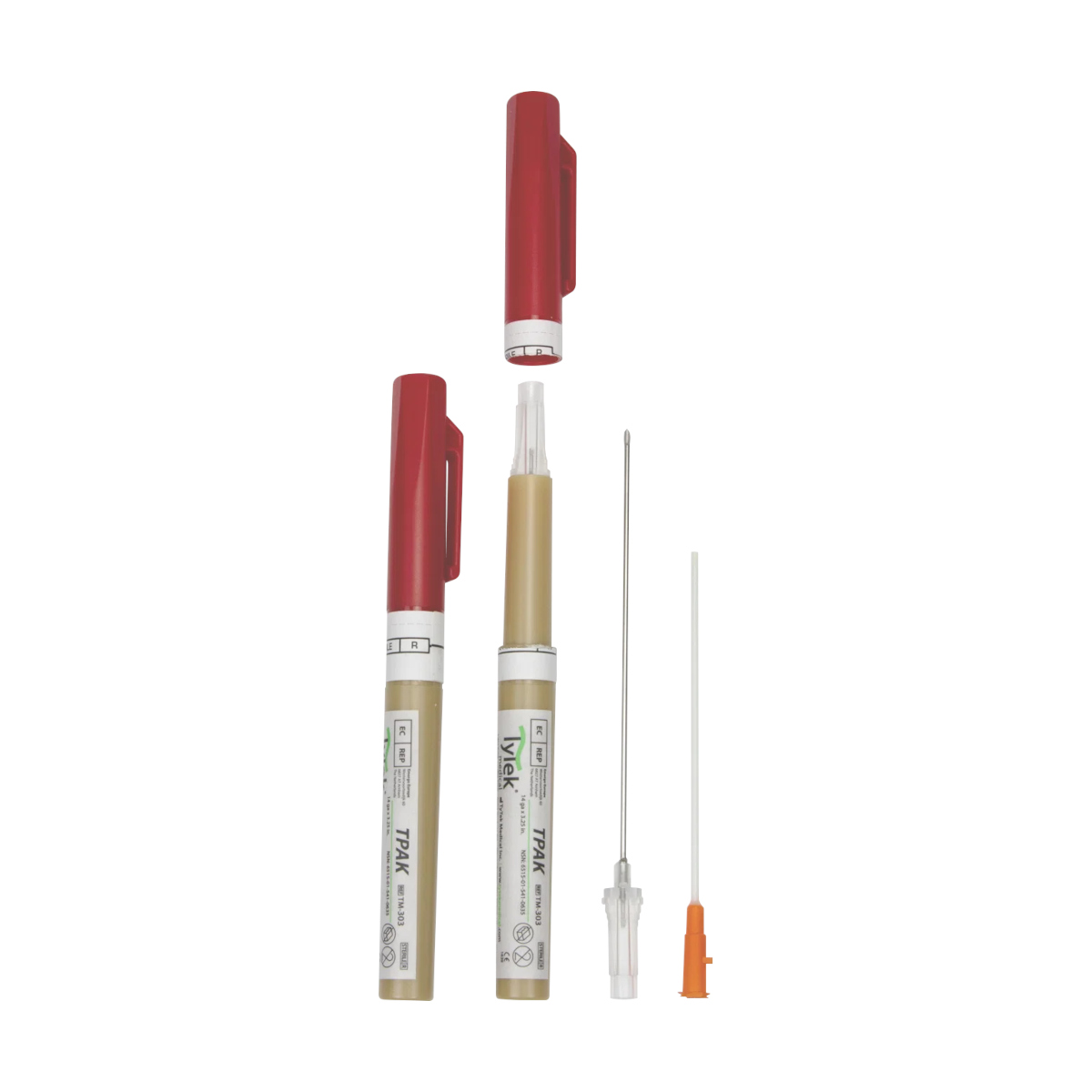
TPAK 14G decompression needle is a sterile, single-use medical device designed to treat tension pneumothorax by chest decompression. It is size 14G and 8.2 cm (3.25”) long, and weighs approximately 12 g.
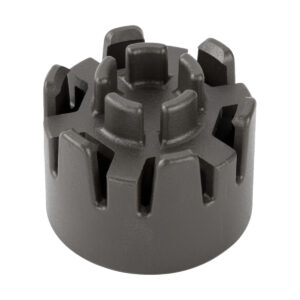
The needle is supplied in a durable tube with a textured, easy-to-open hexagonal cap that protects it. The shock-resistant, precisely dimensioned housing and needle hub protect the needle and catheter during use.
The flashback chamber without a cap gives immediate confirmation of needle placement. TPAK 14G decompression needle is 8.2 cm (3.25”) long and is intended for needle thoracostomy.
Why choose the TPAK 14G decompression needle?
In tension pneumothorax, what matters is whether the needle reaches the pleural space. A length of 8.2 cm (3.25”) allows the needle to penetrate the chest deeply enough, and the flashback chamber without a cap shows straight away whether the needle has been placed correctly. TPAK 14G decompression needle is sterile and single-use, and a hexagonal cap protects it before use.
The housing matters even before use. The tube with a textured hexagonal cap opens easily, and the cap itself protects the needle and keeps it sterile. The compact size and weight of approximately 12 g make the product easy to carry.
How to use the TPAK needle – practical rules
Use the needle in accordance with the instructions for use or the label. It is a sterile, single-use device: once the tube has been opened, do not reuse it. After removing it, look at the flashback chamber, as this is what allows you to confirm needle placement.
In the event of a serious chest injury, first assess the safety of the scene, then call for help on 999 or 112. The rules for calling for help are described in the article Emergency number 112 and calling for help.
Frequently asked questions (FAQ)
What size is the TPAK needle?
The needle is size 14G and 8.2 cm (3.25”) long. The product weighs approximately 12 g.
Can the TPAK needle be reused?
No. It is a sterile, single-use medical device.
How do I confirm needle placement?
This is done using the flashback chamber without a cap, which allows immediate confirmation of needle placement.