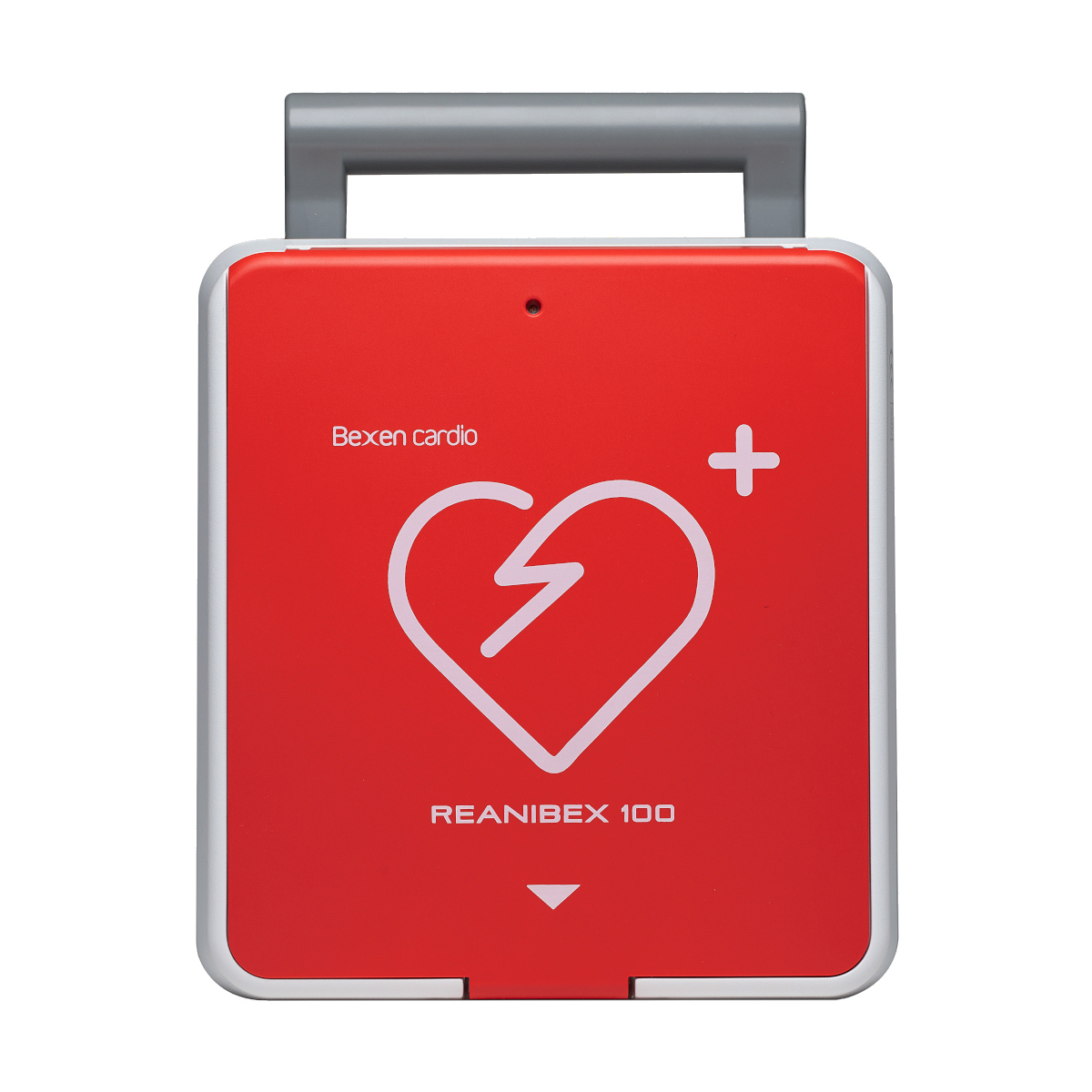
The semi-automatic Reanibex 100 AED defibrillator by Bexen Cardio is an AED for public spaces, companies and rescuers. The device analyses the heart rhythm itself once the electrodes are applied and, when defibrillation is advised, asks the rescuer to press the shock button.
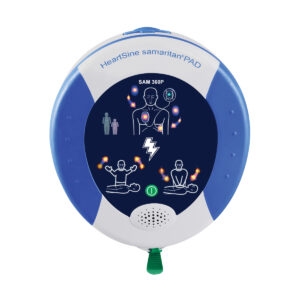
Voice prompts guide the rescuer step by step – from preparing the device, through applying the electrodes, to the shock. The housing has icons, LEDs and a drawing showing electrode placement on an adult and a child. The language button lets you switch prompts between Polish, English and German during the rescue.
Thanks to pre-charged technology, the defibrillator is ready to shock as soon as it is switched on, without waiting for charging. The metronome sets the compression rate, and the CPR assistant warns with the prompt “compress to the rhythm” when the rate deviates from the recommended one. The built-in paediatric mode works with the same electrodes, and an NFC module lets you check the device status or change the language in a phone app. The semi-automatic Reanibex 100 AED defibrillator should be kept in a visible, signposted place so that anyone can reach it quickly.
The Reanibex 100 battery has a 5-year shelf life and is enough for 350 shocks of 200 J, and the universal electrodes for Reanibex 100 – 3 years from the date of manufacture. For carrying, you can use the Reanibex 100 bag or the IP67 protective case. With a training battery and electrodes connected, the device works in demo mode. The semi-automatic Reanibex 100 AED defibrillator requires the electrodes to be replaced after each use.
Why the semi-automatic Reanibex 100 AED defibrillator?
The semi-automatic version lets the rescuer make sure nobody is touching the casualty before pressing the button – it is often chosen by workplaces with trained staff. The CPR assistant helps maintain the correct rate, and three prompt languages make it easier to use in places visited by foreigners. The semi-automatic Reanibex 100 AED defibrillator works well in companies where people are trained in first aid.
The version without a shock button is the Reanibex 100 automatic. You will find other models in the category AED defibrillators and accessories.
Early defibrillation – a link in the chain of survival
The chance of surviving sudden cardiac arrest depends on calling for help quickly, immediate resuscitation and the earliest possible defibrillation. Every minute of delay reduces this chance, which is why an AED must always be charged and ready. A bystander who starts compressions and brings the defibrillator buys time until the emergency medical team arrives.
We describe how the links of rescue fit together in the article How the chain of survival has saved thousands.
Frequently asked questions (FAQ)
Does the Reanibex 100 have a child mode?
Yes – built in, with the same universal electrodes.
Which languages does it speak?
By default Polish, English and German – the language is changed with a button.
How long do the battery and electrodes last?
Battery 5 years (350 shocks of 200 J), electrodes 3 years from the date of manufacture.
What is the warranty?
7 years, extendable.