First aid under the Civil Protection and Civil Defence Programme
Municipalities (gminy), counties (powiaty) and other local government units can organise OLiOC first aid training – that is, training financed from the Civil Protection and Civil Defence Programme (Program OLiOC). First aid training is explicitly listed in it among the tasks in the area of education and training – for residents, young people and the staff of civil protection entities.
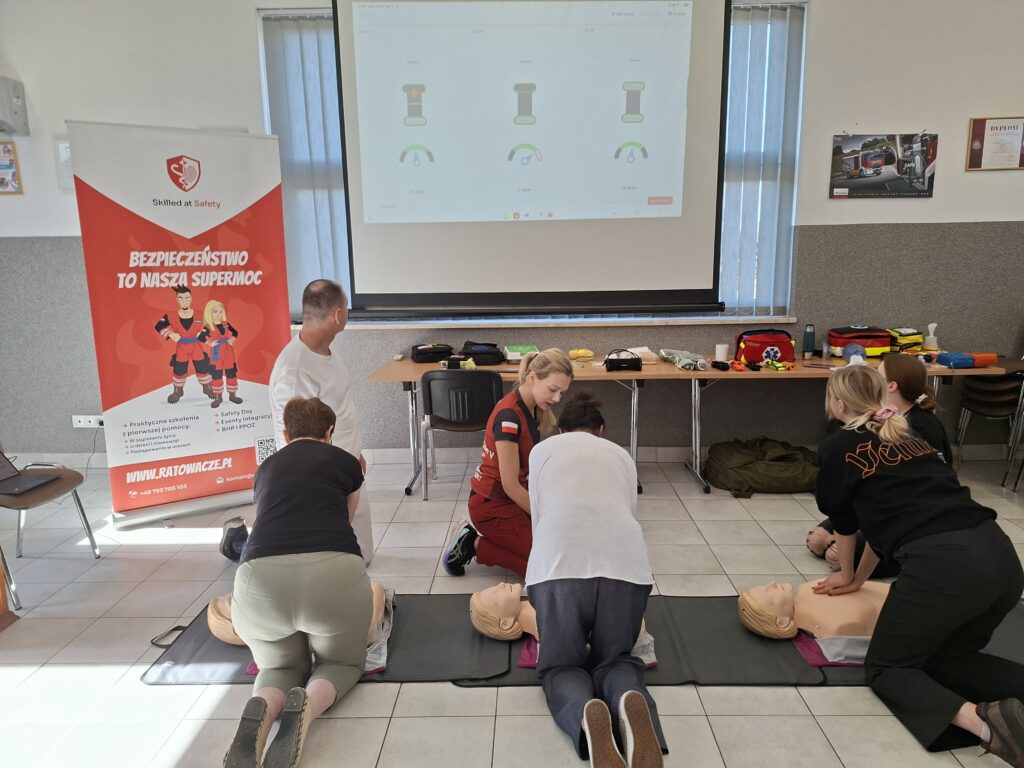
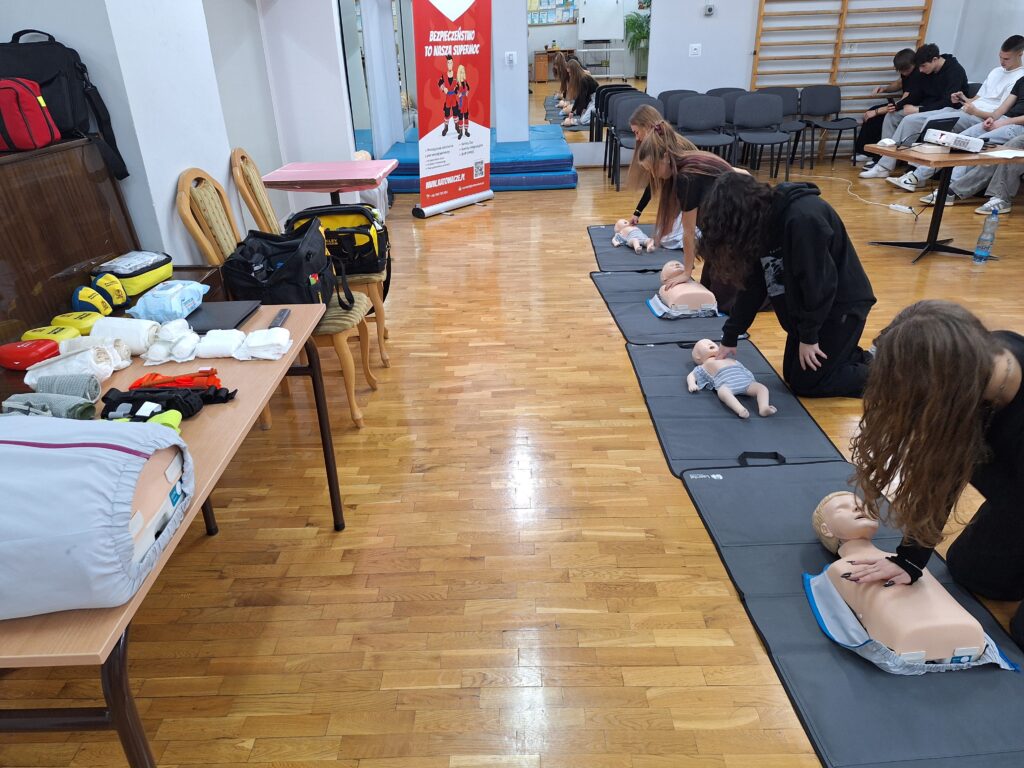
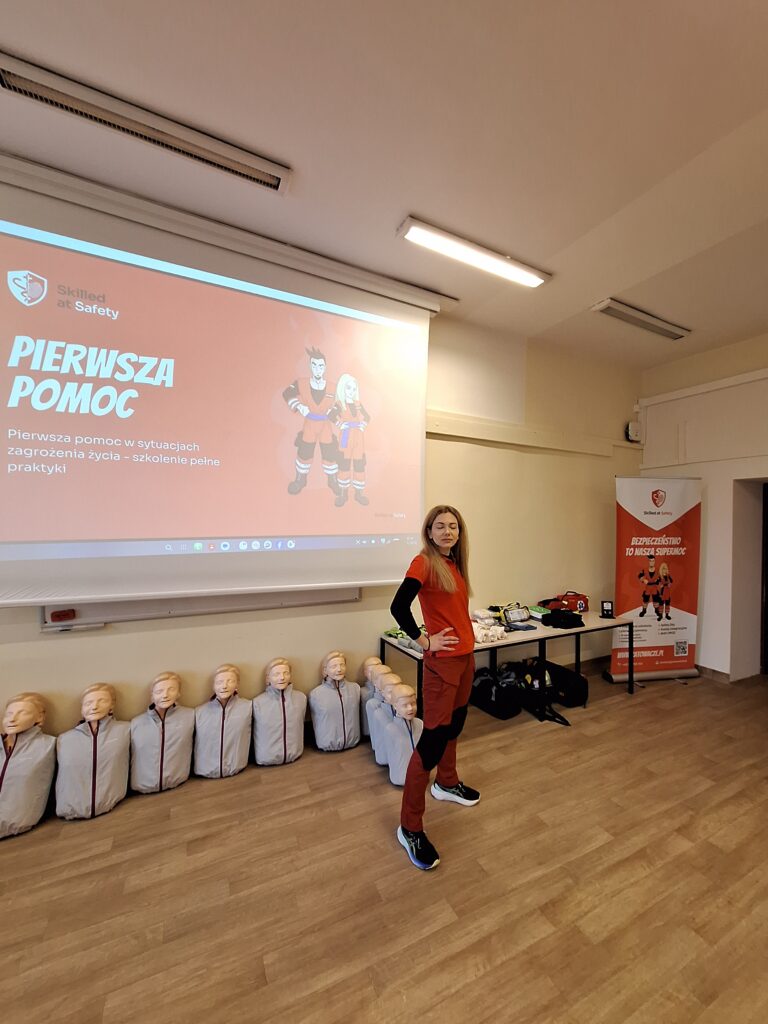
We run BLS & AED first aid training: 6–8 training hours of hands-on practice on manikins and trainers, in small groups – up to 20 people (with more than 12 Participants the training is always run by at least two Instructors). We train at the Client’s premises – in the town hall, a school, a fire station or a community centre. For the grant application we will prepare the training programme and a quote.
BLS & AED – first aid basics
First aid in life-threatening situations – practical workshops
| Introduction | Did you know that in a life-threatening situation it is your actions in the first few minutes that can decide whether the casualty survives? We will teach you how to respond correctly in emergencies. After our course you will know what effective action looks like when a life is at risk. Forget dry rules – join a dynamic, practical first aid course that will genuinely prepare you to act as a Ratowacz! |
| Duration | 6 – 8 training hours |
| Course format | In-person training at a location chosen by the Client. If you do not have your own training room, we can also organise the course at the Ratowacze training centre. |
| Group size | Small training groups – up to 20 people, to keep the workshops practical |
| Goal | During the course you will discover the strength to help others, gain practical first aid skills and the Power to save lives, which will stay with you forever. |
| Training programme | Topic | What will you learn? | Format | Time |
| INTRODUCTION AND SAFETY | 1. BLS: you will learn the basic rules of helping a casualty and the step-by-step approach at the scene 2. First aid priorities: you will learn to recognise priority threats and find out how to stay safe during a rescue 3. Legal aspects of first aid: we explain how the law protects people who give first aid and when you are entitled to reimbursement of costs incurred during a rescue – and, on the other hand, what the liability is for failing to help a casualty in need 4. Coordinating a rescue: we show you how to effectively get bystanders involved – explaining the psychological aspects of giving first aid 5. Assessing the casualty: we show you how to examine a casualty and assess their vital functions and level of consciousness. You will learn the correct approach to a conscious and an unconscious casualty, how to open the airway and how to check breathing | Lecture + case study | 60 min | |
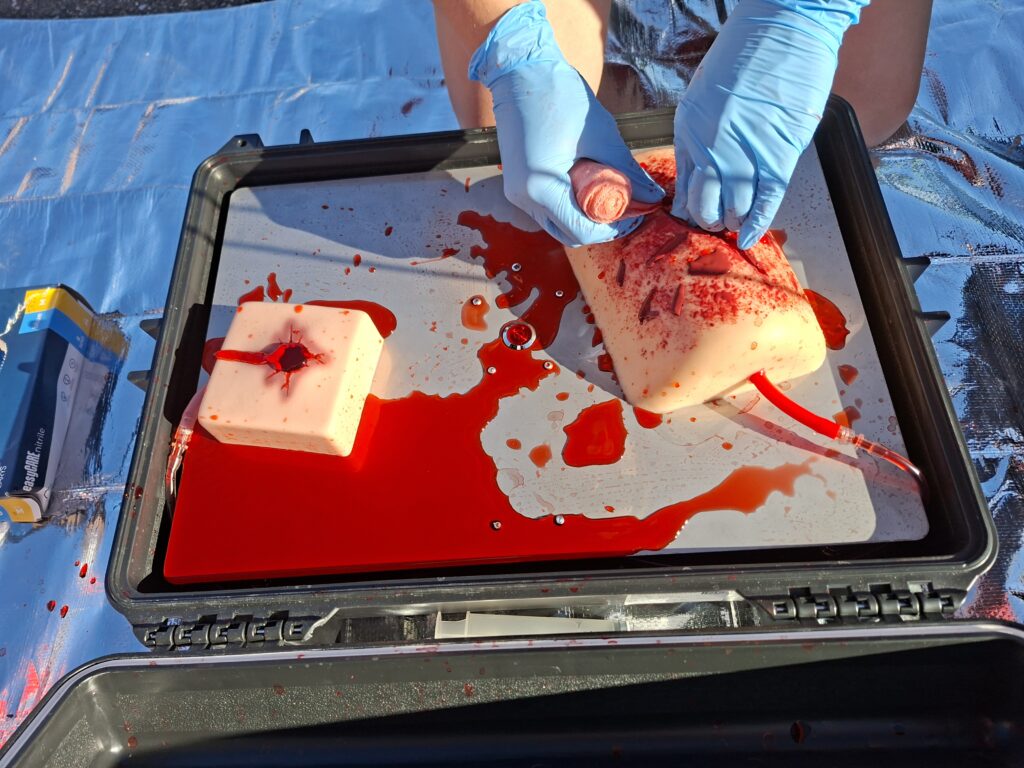
| MASSIVE BLEEDING | 1. Dedicated dressings: we explain how to use tourniquets and various types of individual dressings 2. Exercises: in simulated scenarios you will learn to control massive bleeding quickly and effectively 3. Improvised care: You will learn to improvise in an emergency. We explain what to do when you do not have dedicated dressings at hand | Practical workshops | 60 min | |
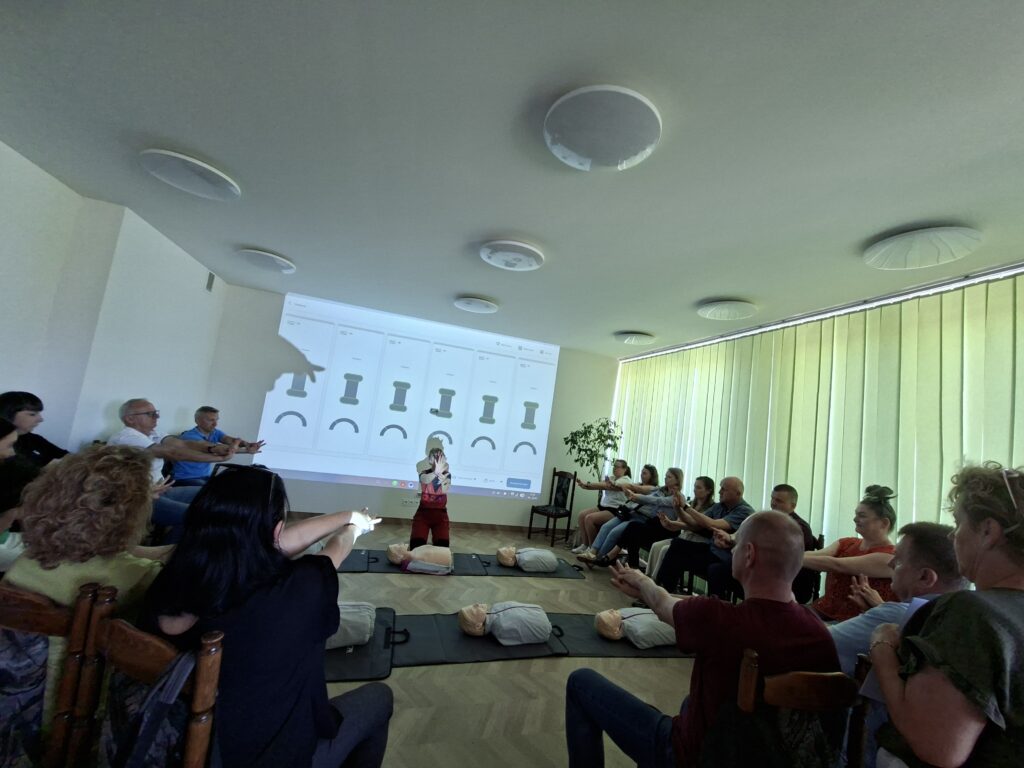
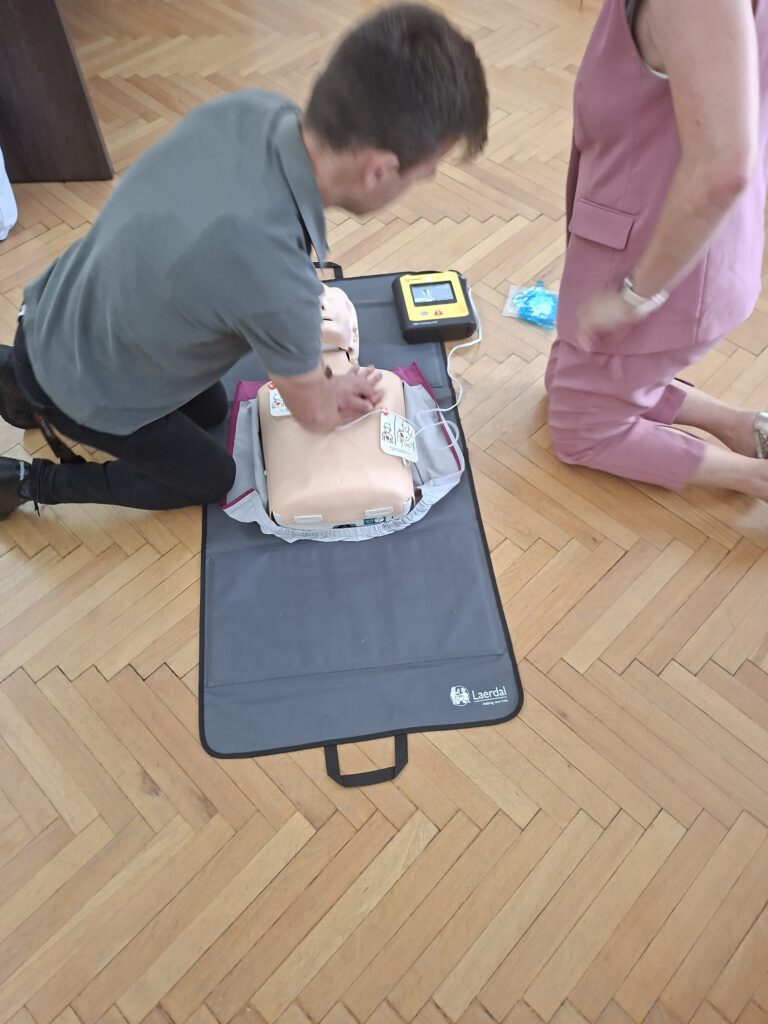
| CPR WITH AN AED | 1. Causes of Sudden Cardiac Arrest (SCA): we explain the most common causes of Sudden Cardiac Arrest, how much time the casualty has in such a situation and how important bystanders are in the so-called chain of survival. 2. Cardiopulmonary Resuscitation (CPR) practice: through intensive practice you will learn to perform CPR correctly – both on your own and as part of a team. Be ready for real physical effort – we practise CPR in different variants, using training manikins that reflect different casualty body types 3. Using an AED during a rescue: you will learn to use an Automated External Defibrillator correctly during simulated rescues. You will practise on the most popular, and therefore most commonly available, types of devices. You will also find out where AEDs can be found in public spaces. | Practical workshops | 90-120 min | |
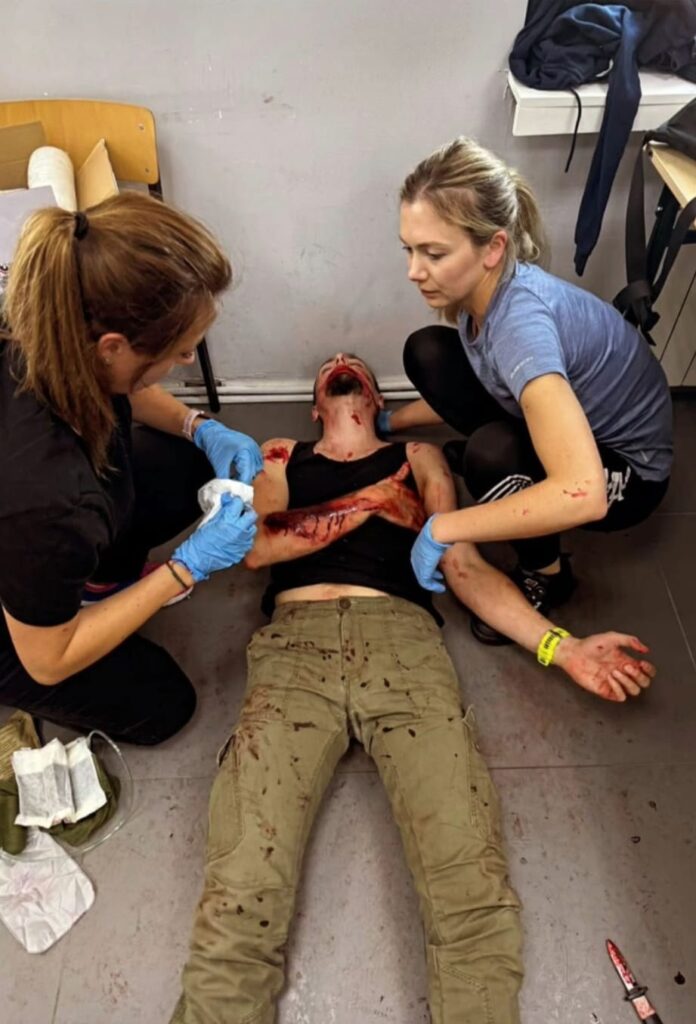
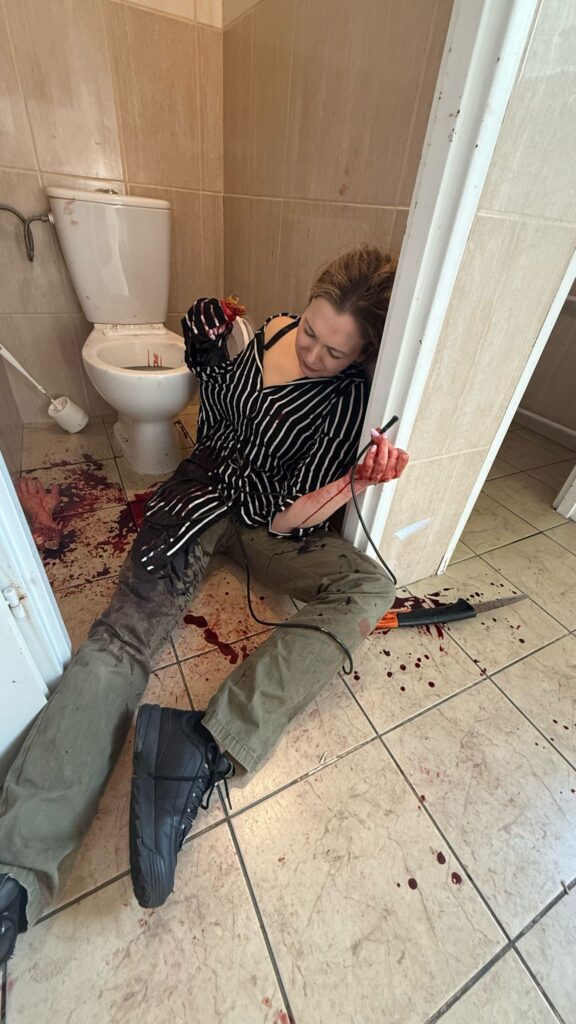
| INJURY CARE | 1. Trauma casualty: you will learn how to help correctly with the most common injuries, minimising pain and the risk of complications 2. Exercises and simulations: you will learn to dress limb fractures, sprains and dislocations, bleeding, burns, stab and gunshot wounds, lacerations, chest and abdominal wounds. You will learn techniques for stabilising injuries – especially of the spine – and what to do in the case of chemical, thermal and electrical injuries 3. Dedicated dressings and improvisation: you will learn to use dressings designed for specific injuries, and also how to cope when specialist equipment is not available | Practical workshops | 90-120 min | |
| FIRST AID IN MEDICAL EMERGENCIES | 1. Heart attack and stroke: statistically the most common “killers” – we will teach you to recognise their symptoms and respond correctly 2. Choking: during the exercises you will learn to clear a casualty's airway both with dedicated techniques and with the LifeVac device, which significantly increases the effectiveness of the rescue when a foreign body is stuck in the airway 3. Other emergencies: You will learn what to do in the event of a severe allergic reaction, a seizure, fainting, feeling faint, shortness of breath, diabetic problems and other emergencies. Along the way we will dispel the most common myths, which lead to risky behaviour in these situations – in our classes you will only learn procedures in line with the current recommendations of the European Resuscitation Council | Practical workshops | 60 min | |
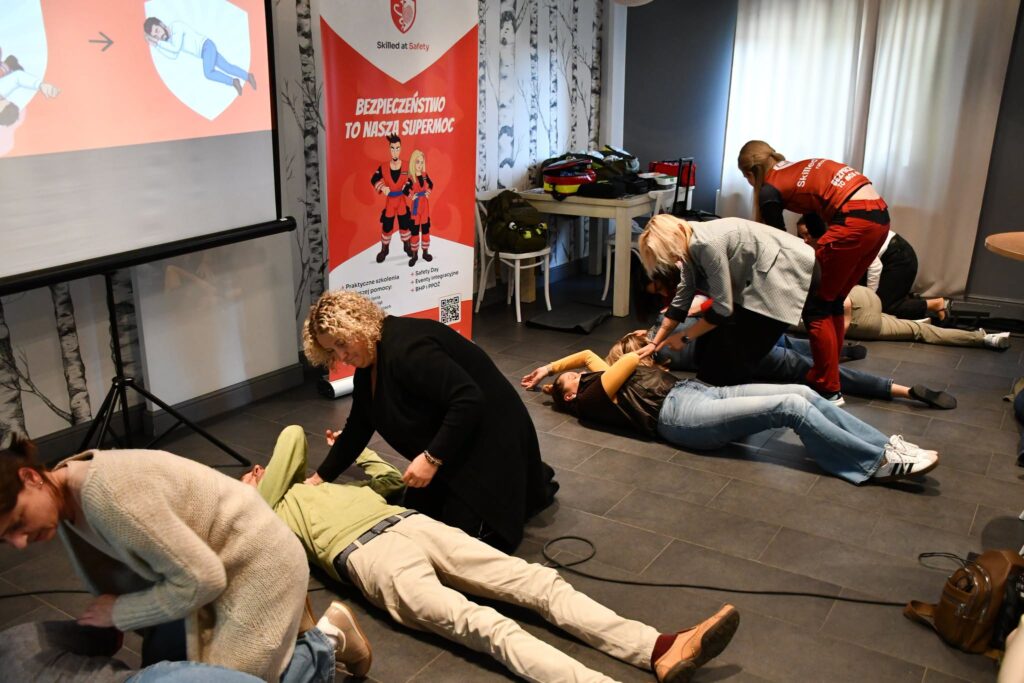
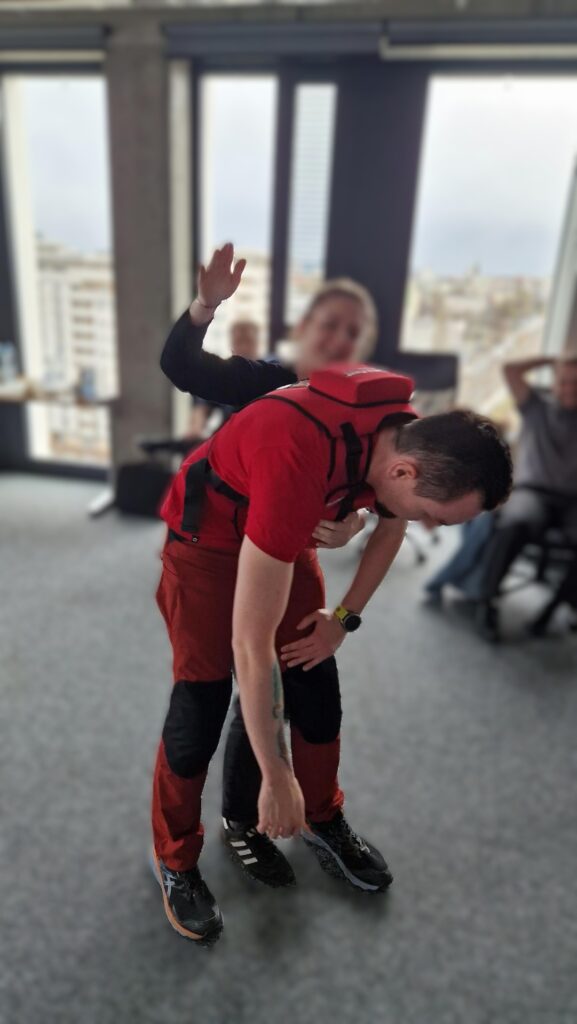
| RECOVERY POSITION | 1. When to use it: you will learn when a casualty should be placed in the recovery position, how to do it safely and how to cope when there is a big difference in weight and build between you and the casualty 2. Exercises: you will learn to place a casualty in the recovery position regardless of the position they were in | Practical workshops | 30 min | |
| A FIRST AID KIT READY FOR ACTION | 1. Quality, not quantity: we use an example to explain the difference between a standard “supermarket” first aid kit and a practical emergency kit 2. Dedicated kits: we present the recommended contents of a home, car and travel first aid kit 3. Your own emergency kit: we will advise you how to put together a first aid kit wisely, so that it is a reliable support in any situation. If you like, you can equip yourself straight away with proven equipment that you will learn to use during the course – our Participants get special discounts on products available in the Ratowacze Shop and we always bring a few sets of the dressings we recommend most | Practical workshops | 30 min | |
| Customisation | This offer describes a standard course covering the basics everyone should know. If you have other needs, want the course to cover specific situations and ways of responding that interest you – let us know, we will adapt the offer especially for you and create a training tailored to your needs! | |||
| Course fee is quoted individually. |
| We prepare the training for units such as a municipality, a county office, a school or a volunteer fire brigade – we tailor the programme, the number of groups and the date to the needs of the unit.Please fill in the contact form below the training description – based on the information provided, we will tailor the offer. |
| For course Participants | Above all, REAL SKILLS – we teach everyone as if they might one day have to help us, so you can be sure we will not let you leave the training room until we are confident you can save a life |
| Personal certificate of completion – confirming the skills you have gained | |
| Why choose our course? | Minimum boredom, maximum practice: We focus on exercises, simulations and real-life scenarios |
| Experienced instructors – passionate people with a lifesaver's heart who can pass on knowledge in an accessible way and in a relaxed atmosphere | |
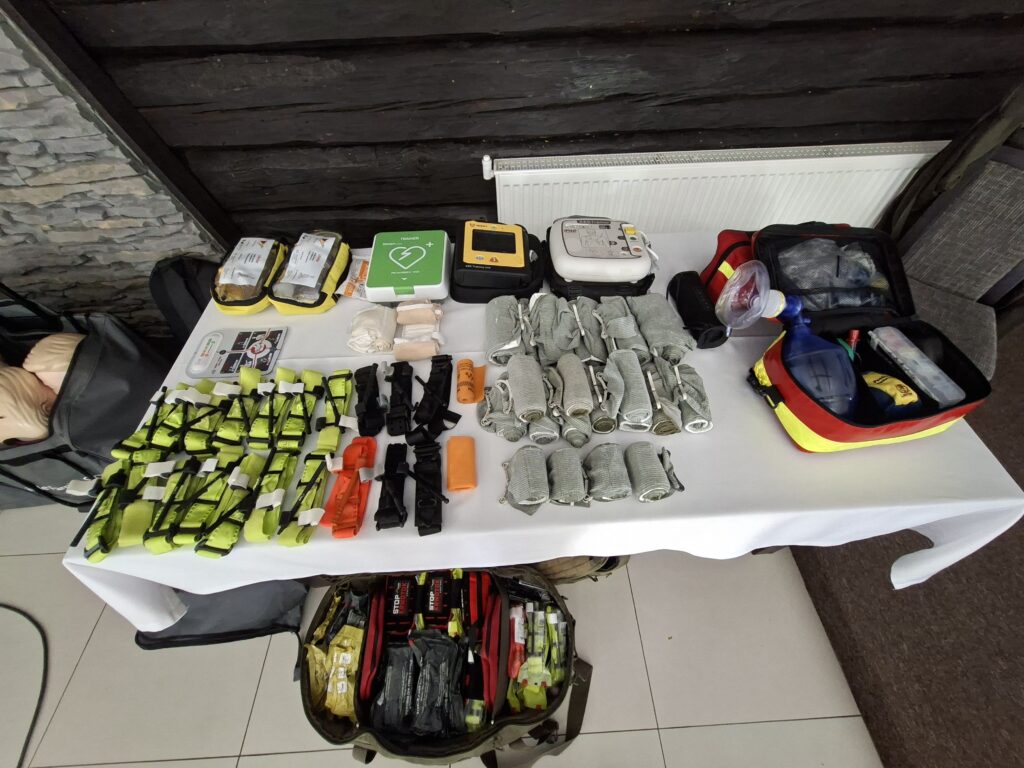
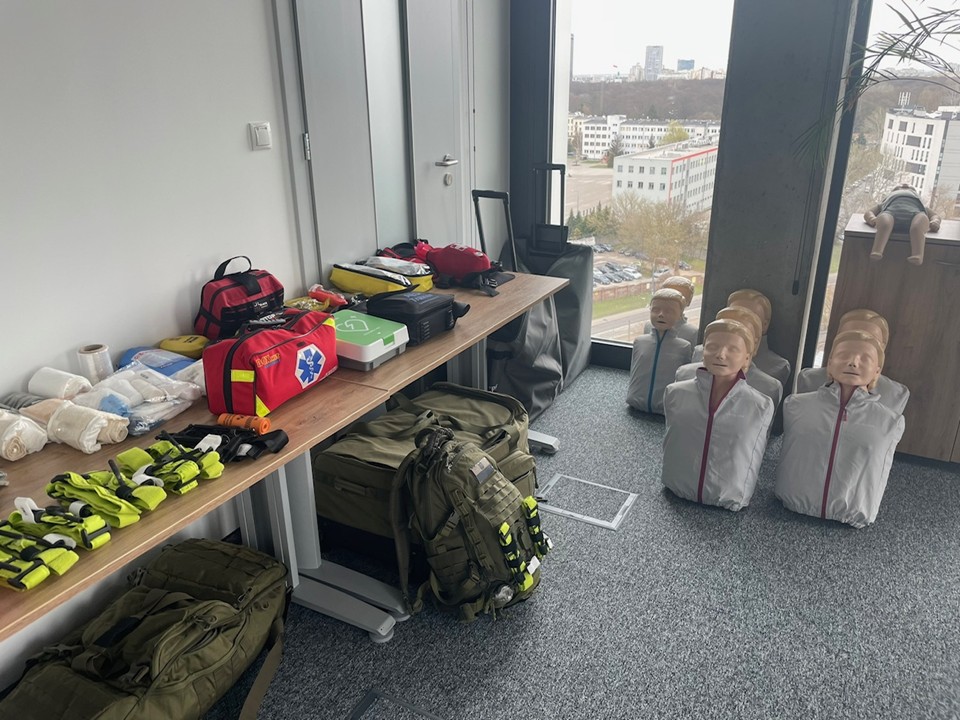
| Equipment: Interactive manikins, the most popular AED models and plenty of proven dressings of various types for Participants to use |
OLiOC first aid training – what does the programme provide for?
The Civil Protection and Civil Defence Programme for 2025–2026, adopted by the Council of Ministers under the Act of 5 December 2024 on civil protection and civil defence, lists among its objectives preparing citizens “to provide first aid”. OLiOC first aid training falls under Area 4 “Education, training and the training base and facilities”, which includes, among others:
- Training and demonstrations for the general public on how to behave correctly in an emergency.
- Educating young people in providing first aid.
- Training of rescue personnel in providing first aid.
- Training of the staff of civil protection entities, including qualified first aid.
The programme lists local government units among those carrying out educational tasks. The draft programme for 2027–2031, in Area 6 “Education and training”, explicitly provides for “organising first aid training”.
How can a municipality or county finance the training?
Local governments receive OLiOC Programme funds as a targeted grant from the state budget, in a call run by the voivode. The limit for each unit depends on the number of residents, and the detailed rules and deadlines are announced by each voivodeship office. Step by step, it looks like this:
- Check the call conditions at your voivodeship office and plan a task in the area of education and training.
- Decide which groups you want to train – on this basis we will prepare the training programme and a quote for the application.
- Once the grant is awarded, we agree on the dates and venues – we arrive with a full set of equipment.
- After the training, each Participant receives a personal certificate, and the local government receives the documents needed to settle the task.
Whether a given training is financed is decided by the voivode in the call – which is why we prepare the programme and quote for OLiOC first aid training for a specific application.
BLS & AED training programme
The first aid training we offer to local governments is our full BLS & AED – basic first aid programme:
- Introduction and safety – how to act at the scene, priorities, legal aspects of first aid, coordinating bystanders and assessing the casualty (60 min).
- Massive bleeding – tourniquets, individual dressings and improvised management without dedicated equipment (60 min).
- CPR with an AED – resuscitation alone and in a team, using the most popular AED models (90–120 min).
- Treating injuries – fractures, dislocations, burns, wounds, injury stabilisation, including the spine (90–120 min).
- First aid in medical emergencies – heart attack, stroke, choking, allergic reaction, seizures, fainting, diabetes (60 min).
- Recovery position (30 min) and a first aid kit ready for action (30 min).
You will find the full description above, in the “Training programme” tab. We teach only procedures consistent with the current recommendations of the European Resuscitation Council. We can tailor the programme to the group – e.g. extend the exercises on stopping bleeding and treating injuries.
Who can a local government organise the training for?
We train the groups local governments work with most often:
- Residents – as part of training for the population.
- Employees of municipal or county offices and their organisational units.
- Volunteer firefighters – see also training for volunteer fire brigades.
- Teachers and school staff – see also training for teachers.
- Members of non-governmental organisations and local leaders.
We organise training under the programme all over Poland, at a venue indicated by the Ordering Party – in the town hall, a school, a fire station or a community centre. We arrive with a full set of equipment: manikins, training defibrillators and dressings.
In sudden cardiac arrest, action taken by a bystander can decide whether the casualty survives – and trained residents, officials and volunteer firefighters are often the first on the scene. AED defibrillators and first aid kits for offices and public buildings are available in our shop.
Ask about training under the OLiOC Programme
Frequently asked questions (FAQ)
Can a municipality finance first aid training from the OLiOC Programme?
The Civil Protection and Civil Defence Programme provides for first aid training in the area of education and training, and local government units receive targeted grants for its tasks. Funding for a specific task is decided by the voivode in the call.
Who submits the grant application?
The application is submitted by the local government unit – a municipality, county or voivodeship – to the competent voivodeship office, in line with the rules of the call. We will prepare the training programme and a quote for the application.
Does OLiOC first aid training require verification by the Fire University (Akademia Pożarnicza)?
Verification by the Fire University applies to civil protection and civil defence training whose programmes are set out in the regulation of the Minister of the Interior and Administration of 6 February 2025 (Journal of Laws 2025, item 162). Our training is first aid training – the requirements for the contractor are set by the local government in its request for quotation.
How many people can take part in one training session?
We train in groups of up to 20 people. One Instructor works with a maximum of 12 Participants, so with a larger group the training is always run by at least two Instructors. For more people, we plan several groups.
How long is the course?
6–8 training hours, mostly practical exercises on manikins and trainers.
Do Participants receive a certificate?
Yes – every Participant receives a personal certificate of completion.