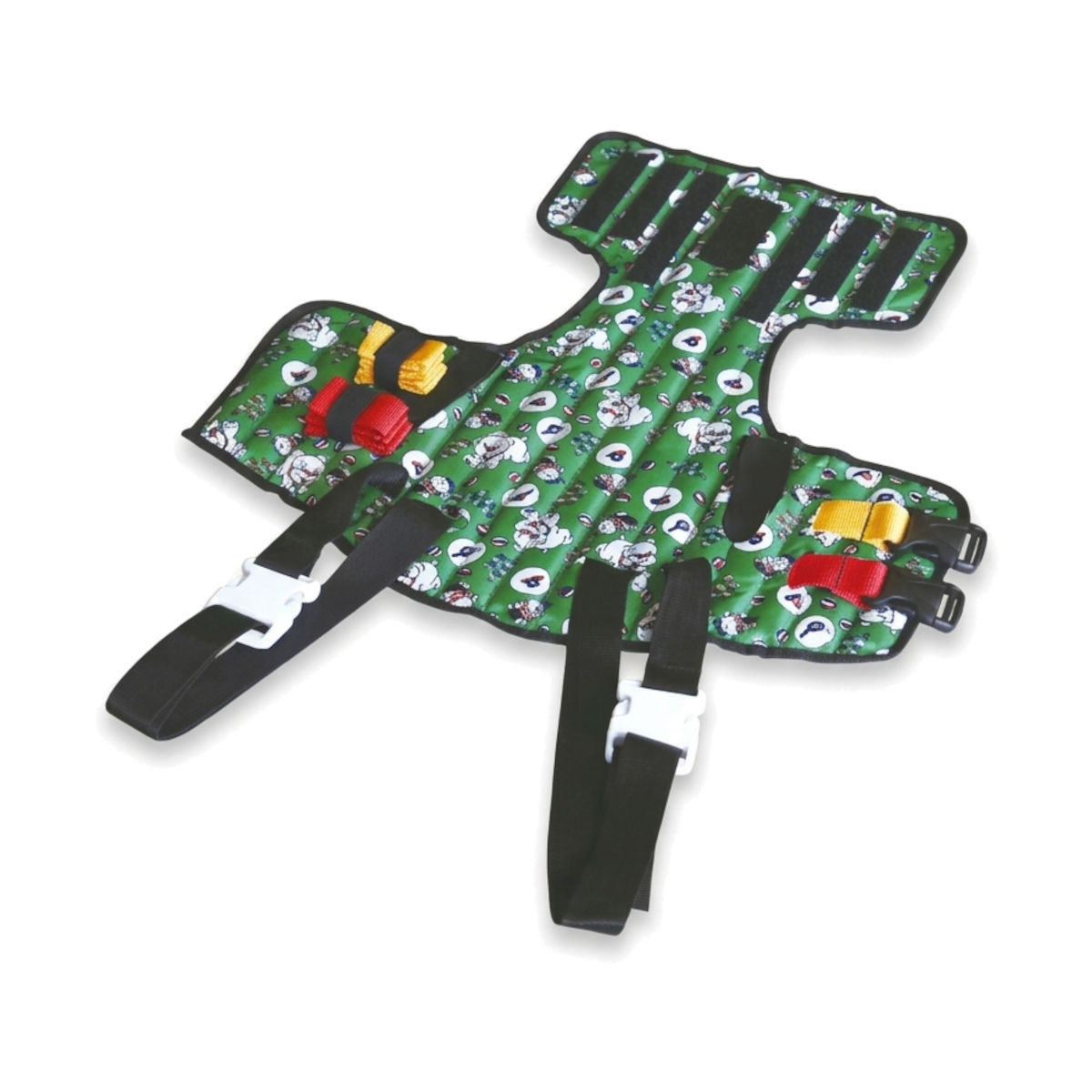
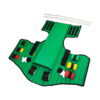
Kendrick extrication device for children (KED) is a paediatric rescue device designed for immobilising and extricating young patients with suspected injuries to the spine, neck, head, chest or ribs. It is used in particular when a child needs to be safely removed from a vehicle, a confined space or another hard-to-reach place.
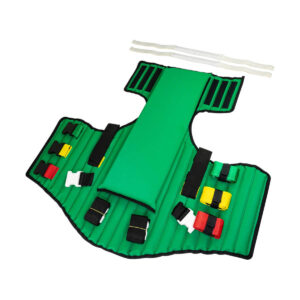
The design of the vest stabilises the torso, head and cervical spine, limiting unwanted movement of the patient during extrication. The semi-rigid structure supports the body, and the system of straps and buckles allows quick, secure fitting. Colour-coded straps help to keep to the correct fastening order, which makes work easier in situations that call for quick action.
The vest is intended for emergency medical teams, volunteer fire brigades (OSP), water rescue services (WOPR), mountain rescue services (GOPR), medical facilities and medical event cover. It is green, measures 55 × 62 cm when unfolded and weighs 1.5 kg. Kendrick extrication device for children makes it easier to stabilise a small patient before transferring them onto a spine board.
Why choose a Kendrick extrication device for children?
Kendrick extrication device for children is the paediatric version, intended for patients with a suspected injury to the spine or to the chest and rib area. It is used, among other things, for extricating children after road traffic collisions, immobilising a paediatric patient in a seated position, stabilising before transfer onto a spine board, and for work in a confined space.
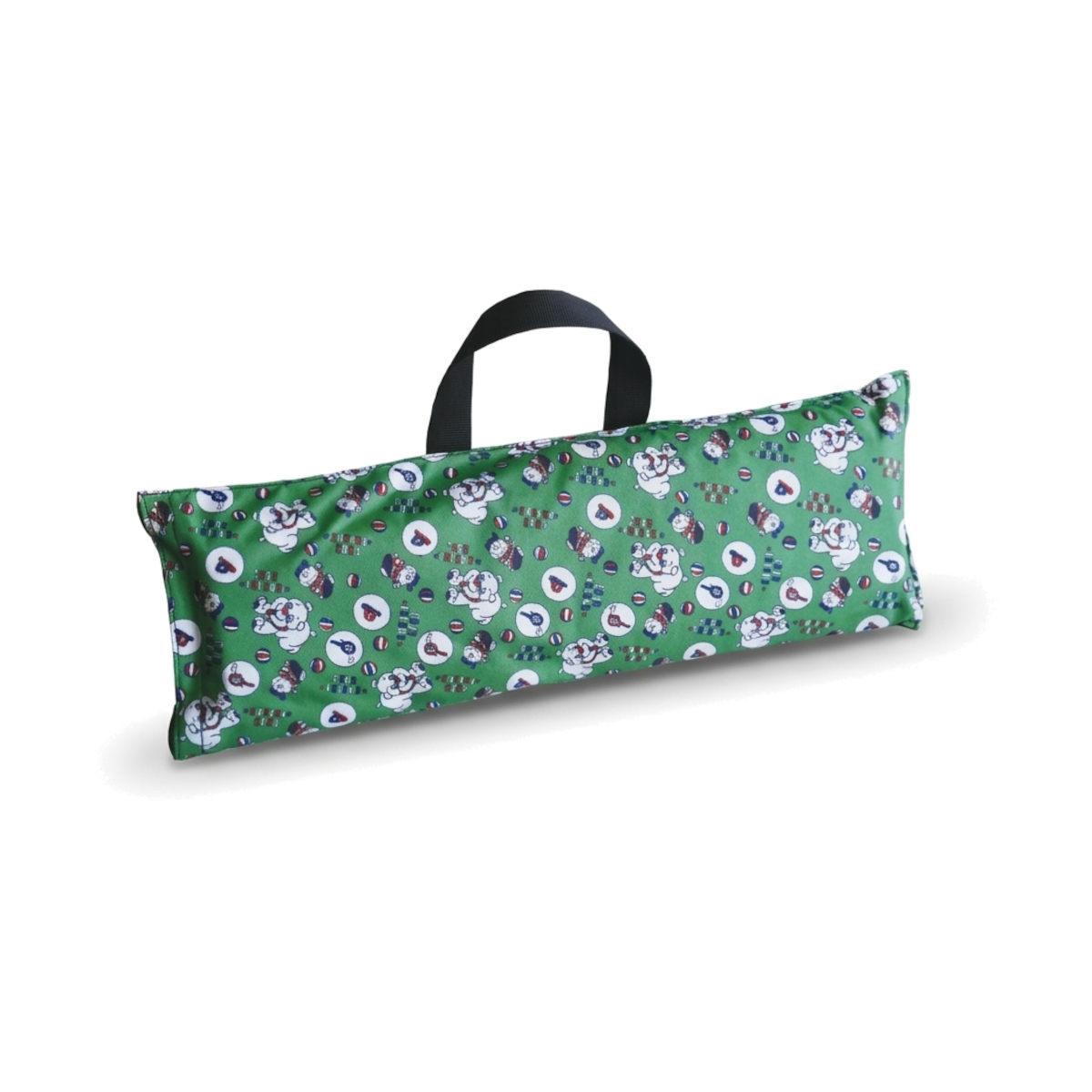
When folded it measures 61 × 18 × 9 cm, which makes it easier to store and transport. You will find other stabilisation equipment in the category Cervical collars and KED.
Rules for using a KED on a child
The vest is a medical device, so use it in accordance with the instructions for use or the label. It is used to stabilise the torso, head and neck during extrication and to prepare the child for further transport on a spine board, stretcher or other transport equipment. Fasten the straps in the order indicated by their colours.
Before taking any action, assess the safety of the scene and call for help on 999 or 112. The article Emergency number 112 and calling for help.