
First aid training from the OLiOC Programme: what you will learn from this post
- What is the Civil Protection and Civil Defence Programme?
- What first aid training does the programme provide for?
- Changes to the programme from 30 October 2026 – not just shelters.
- How a local government can finance the training – step by step.
- First aid also means equipment: AEDs and STOP BLEEDING kits.
- First aid training for local governments – how we do it
Since 2025, municipalities, counties and voivodeships have been able to draw on funds from the Civil Protection and Civil Defence Programme (Program OLiOC). The programme finances not only shelters, equipment and communications – but also the education of residents. First aid training from the OLiOC Programme is one of the ways in which a local government can prepare residents, office staff or volunteer firefighters to act in an emergency. In this post we explain what the programme provides for, how the funding works and what to look out for when choosing a training.
What is the Civil Protection and Civil Defence Programme?
The programme is based on the Act of 5 December 2024 on civil protection and civil defence, which has been in force since 1 January 2025. On its basis, the Council of Ministers adopted the Civil Protection and Civil Defence Programme for 2025–2026. Its objectives explicitly include preparing citizens “to provide first aid and other assistance in the event of threats”.
The programme divides its tasks into areas. Training falls under Area 4 “Education, training and the training base and facilities”. According to the programme, the emphasis is to be placed on “learning the skills of first aid, survival and self-protection” – in schools, universities, local government units, companies and local communities.
What first aid training does the programme provide for?
In Area 4 of the 2025–2026 programme you will find, among others:
- Training and demonstrations for the general public on how to behave correctly in an emergency.
- Educating young people in providing first aid.
- Training of rescue personnel in providing first aid.
- Training of the staff of civil protection entities, including qualified first aid.
The programme lists local government units among those carrying out educational tasks. The draft of the next programme, for 2027–2031, in Area 6 “Education and training”, explicitly provides for “organising first aid training”, and names educational activities, especially for people under 18, as a priority task.
Changes to the programme from 30 October 2026 – not just shelters
In 2026, the programme funds were rigidly divided between areas, with the focus on collective protection facilities – shelters and temporary shelter sites. In practice, this money turned out to be spent too slowly. As the Ministry of the Interior and Administration pointed out in its justification of the changes, the greatest difficulties and the lowest spending rate were recorded precisely in the area of collective protection facilities, due to lengthy public procurement and investment and construction processes.
That is why the Council of Ministers amended the resolution on the Civil Protection and Civil Defence Programme for 2025–2026. The changes came into force on 30 October 2026 and introduce more flexible spending rules:
- Funds can be transferred between the six areas of the programme – the total of transfers, except transfers from Area 1 (collective protection facilities) to Area 2 (logistics), may not exceed 15% of the funds.
- Part of the money intended, among others, for shelters can be redirected to education, training and the training base and facilities, as well as to equipment.
- Funds can also be spent more flexibly within the “Education, training and the training base and facilities” area itself.
- The total limit of funds for the programme does not change.
For a local government this means that funds that could not be spent on shelters can finance, among others, first aid training and the purchase of equipment. The details – including whether and how funds can still be transferred in your unit – are worth checking with the voivodeship office.
How a local government can finance the training – step by step
Local government units receive OLiOC Programme funds as a targeted grant from the state budget. The call is run by the voivode, and the limit for a municipality or county depends on the number of residents. Rules and deadlines differ between voivodeships – e.g. in the Wielkopolska Voivodeship, the call for 2026 was announced in the voivode’s letter of 20 January 2026. Most often it looks like this:
- Check the call announcement at your voivodeship office – the limit for your unit and the areas in which tasks can be submitted.
- Plan a task in the area of education and training: who you want to train, how many people and how many groups.
- Prepare the application – the training programme and a quote will come in handy.
- Once the grant is awarded, choose a contractor in line with the procurement rules that apply in your unit.
- After the training, settle the task on the basis of the training documentation.
Important: whether a specific task is financed is decided by the voivode in the call. It is therefore worth preparing the programme and quote for a specific application – for local governments we do this on the page OLiOC first aid training for municipalities and counties.
First aid also means equipment: AEDs and STOP BLEEDING kits
The OLiOC Programme also provides for equipping units with first aid equipment, and local governments use it to buy, among others, AED defibrillators – e.g. under Area II “Logistics and continuity of supplies”, section “Replenishment of resources”. Training and equipment are best planned together: trained residents and employees know where the defibrillator is and how to use it.
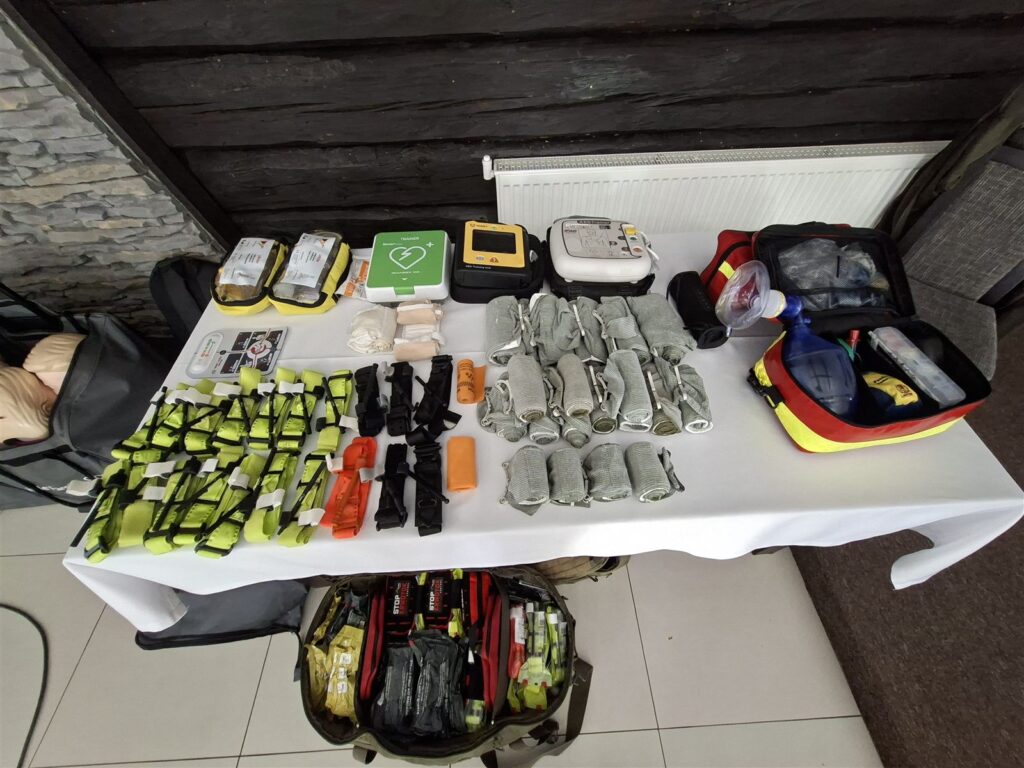
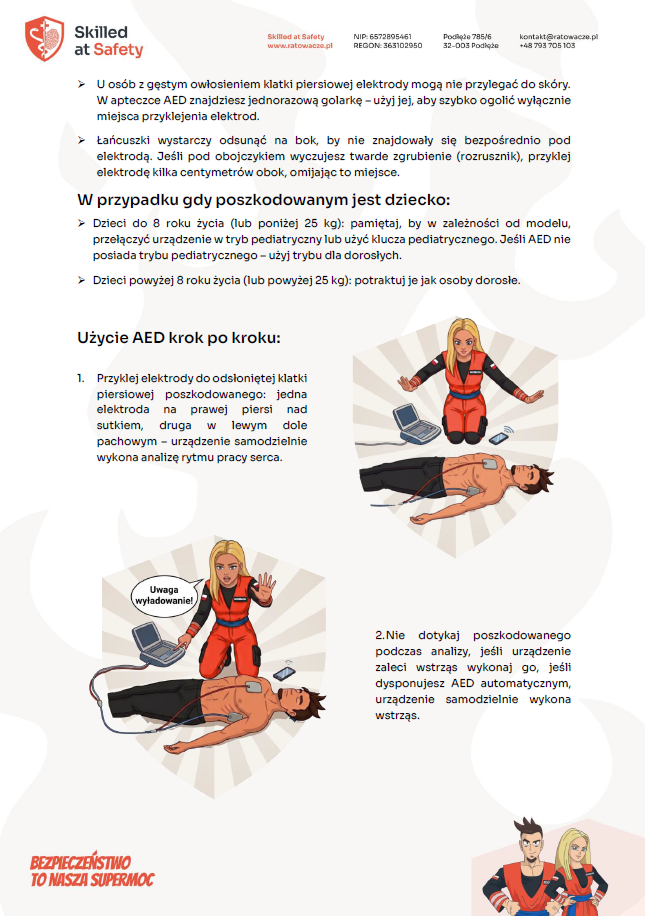
Alongside AEDs, it is worth thinking about kits for stopping massive bleeding. In the article A first aid kit ready for massive bleeding we wrote that such kits should be as widely available as defibrillators – and they can be kept in the same cabinets in which AEDs are installed. In our BLS & AED training we practise both resuscitation with a defibrillator and stopping bleeding with a tourniquet and an individual dressing.
First aid training for local governments – how we do it
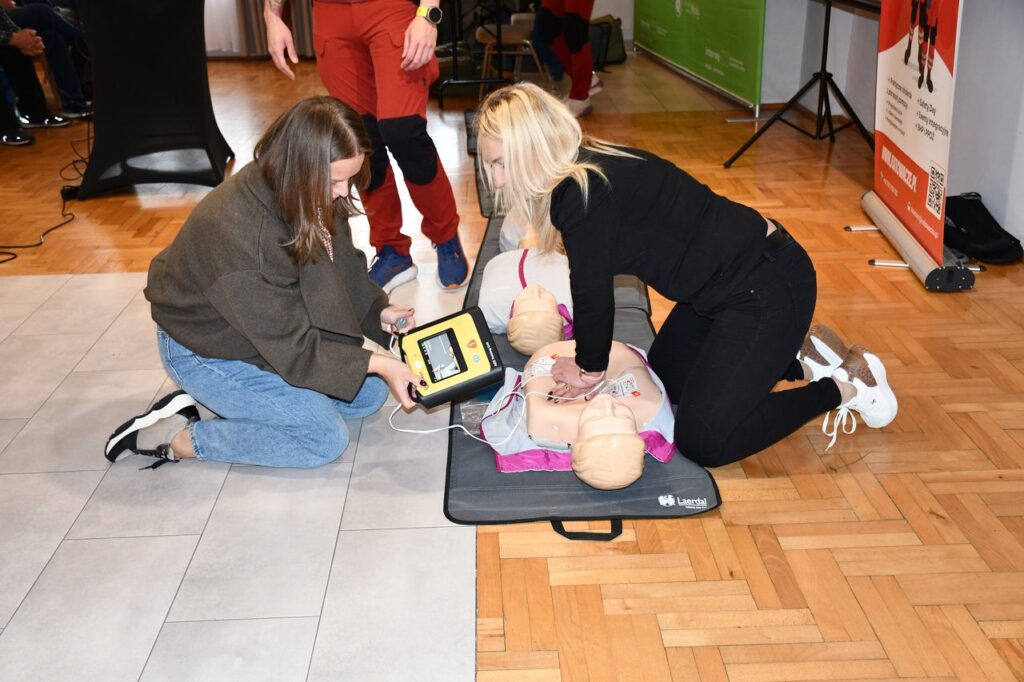
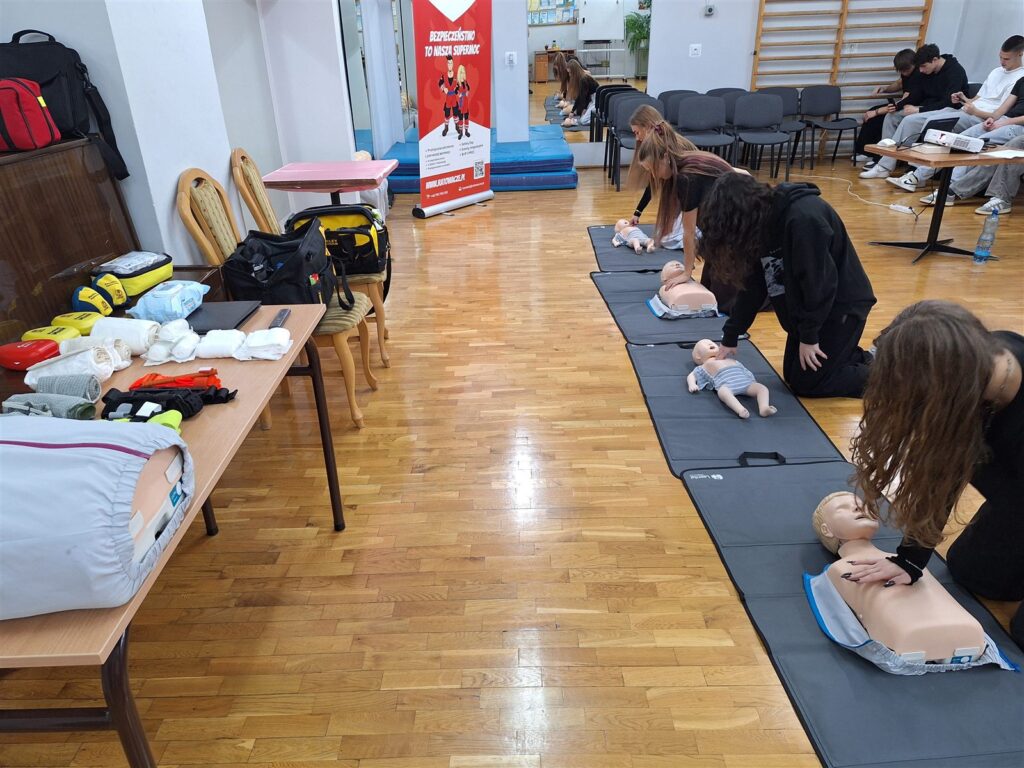
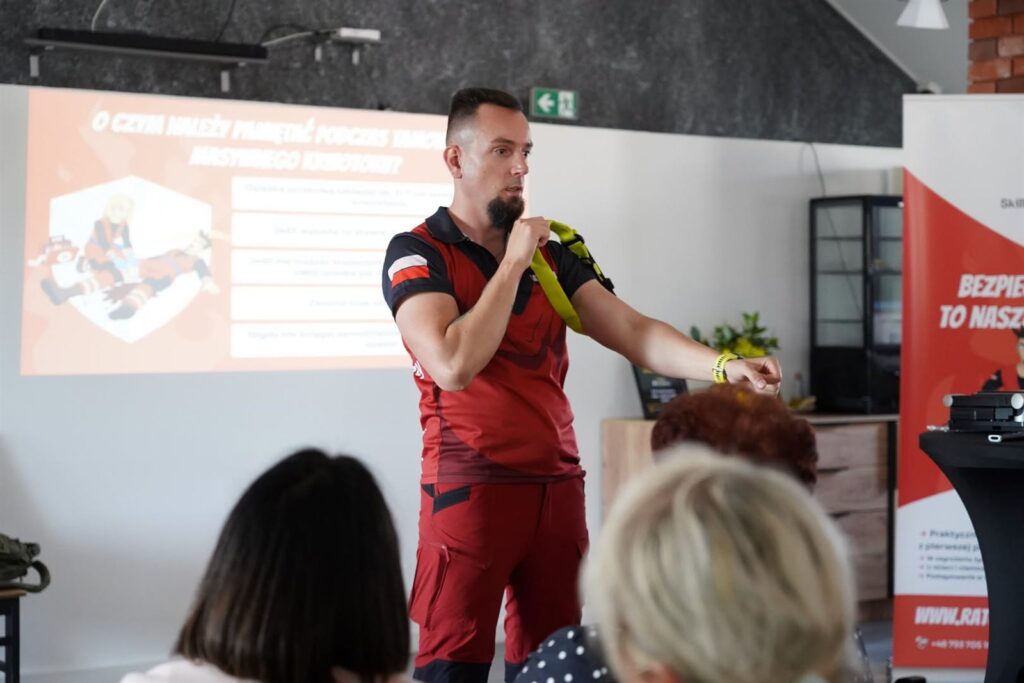
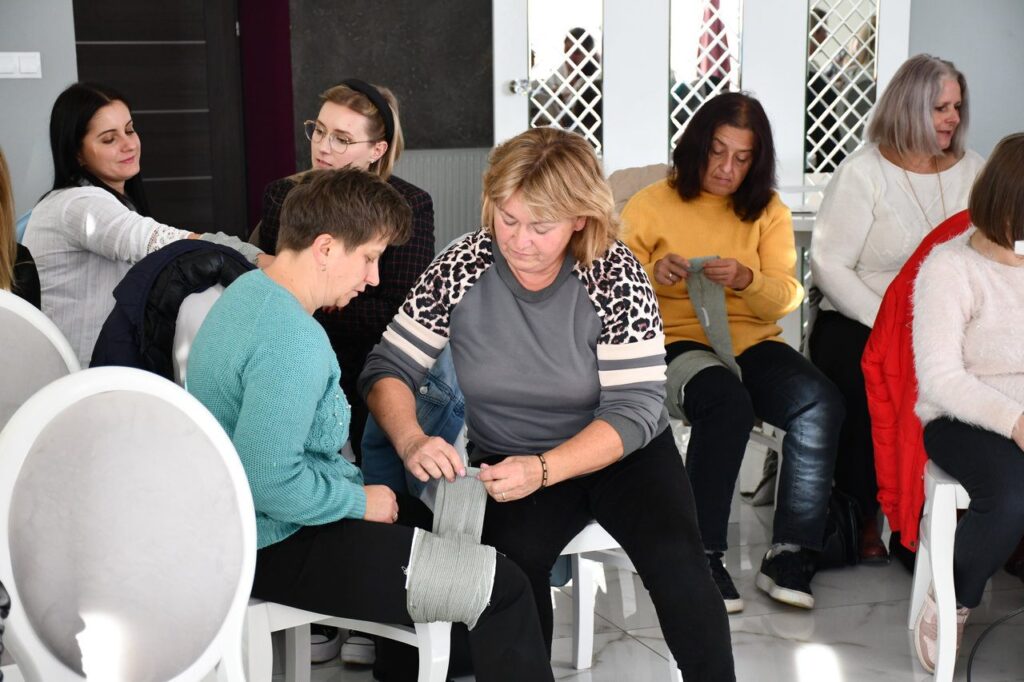
For municipalities, county offices, schools and volunteer fire brigades we run BLS & AED – basic first aid training: 6–8 training hours of hands-on practice on manikins and trainers, in groups of up to 20 people (with more than 12 Participants the training is always run by at least two Instructors). The programme includes, among others, resuscitation with an AED, stopping massive bleeding, treating injuries and dealing with medical emergencies, in line with the current recommendations of the European Resuscitation Council. Each Participant receives a personal certificate.
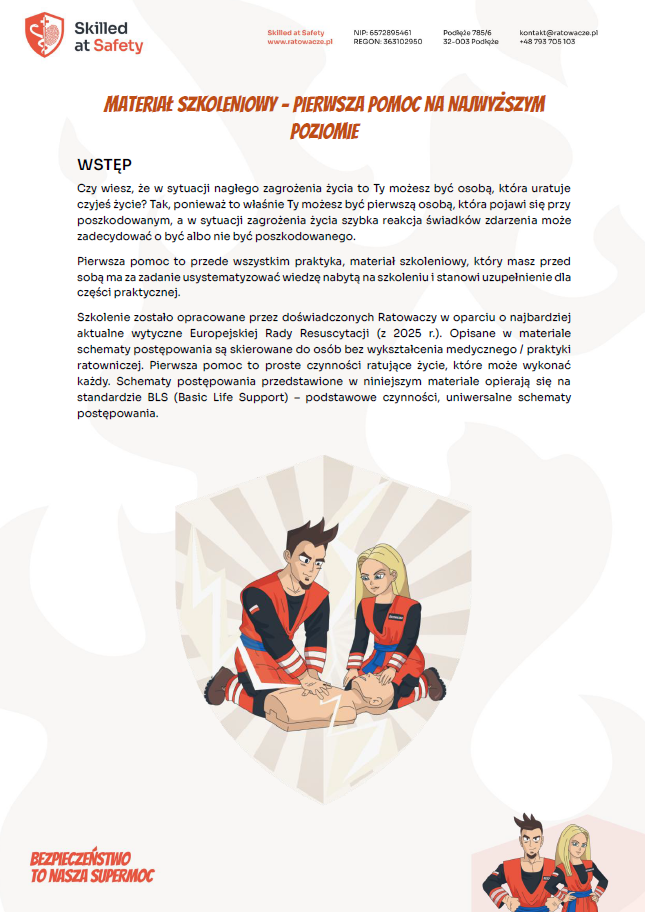
Training Participants can also receive guides with training materials from us – this way we focus on practice in the training room, and they take the theory home. We write more about it in the post Practice on site, theory to take away.
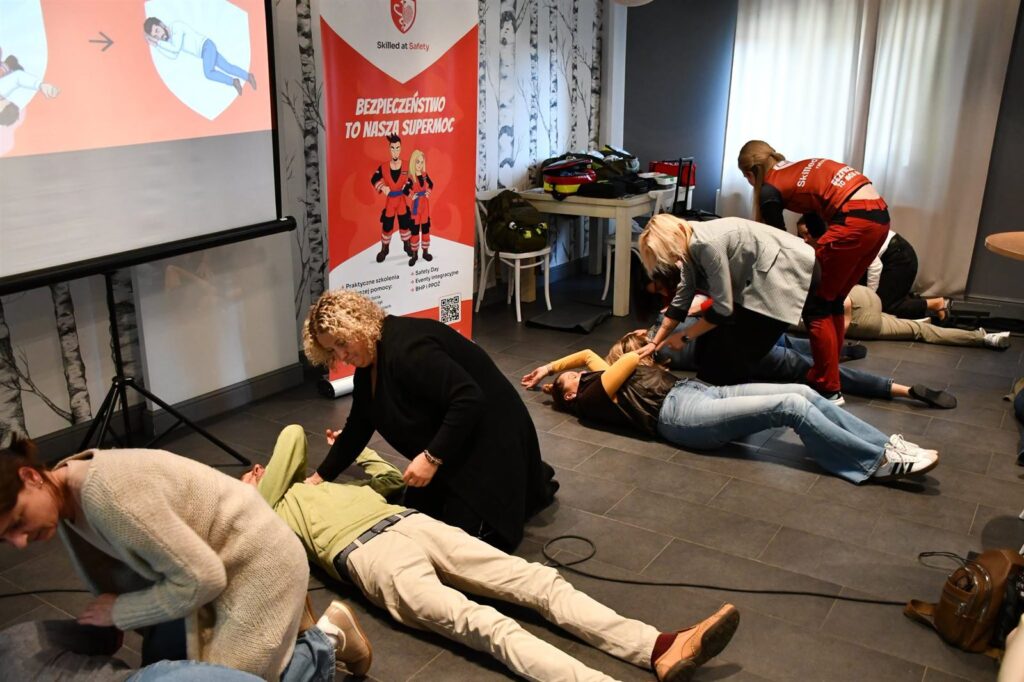
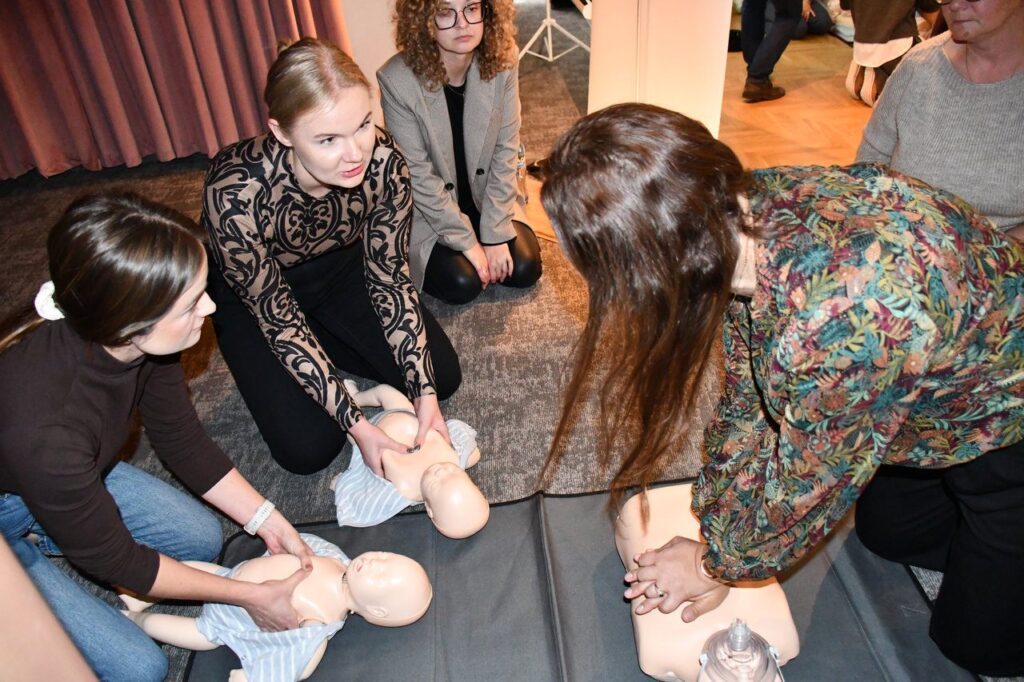
We organise training under the programme all over Poland, at a venue indicated by the Ordering Party – in the town hall, a school, a fire station or a community centre. We arrive with a full set of equipment: manikins, training defibrillators and dressings.