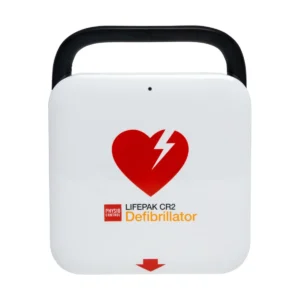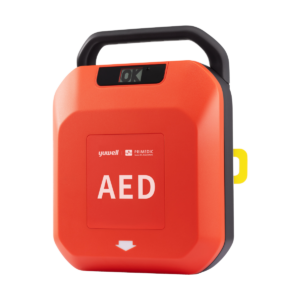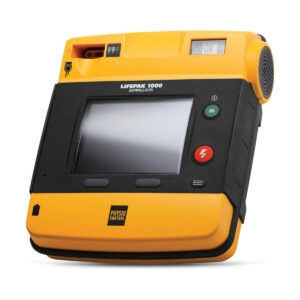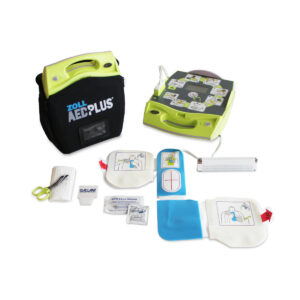
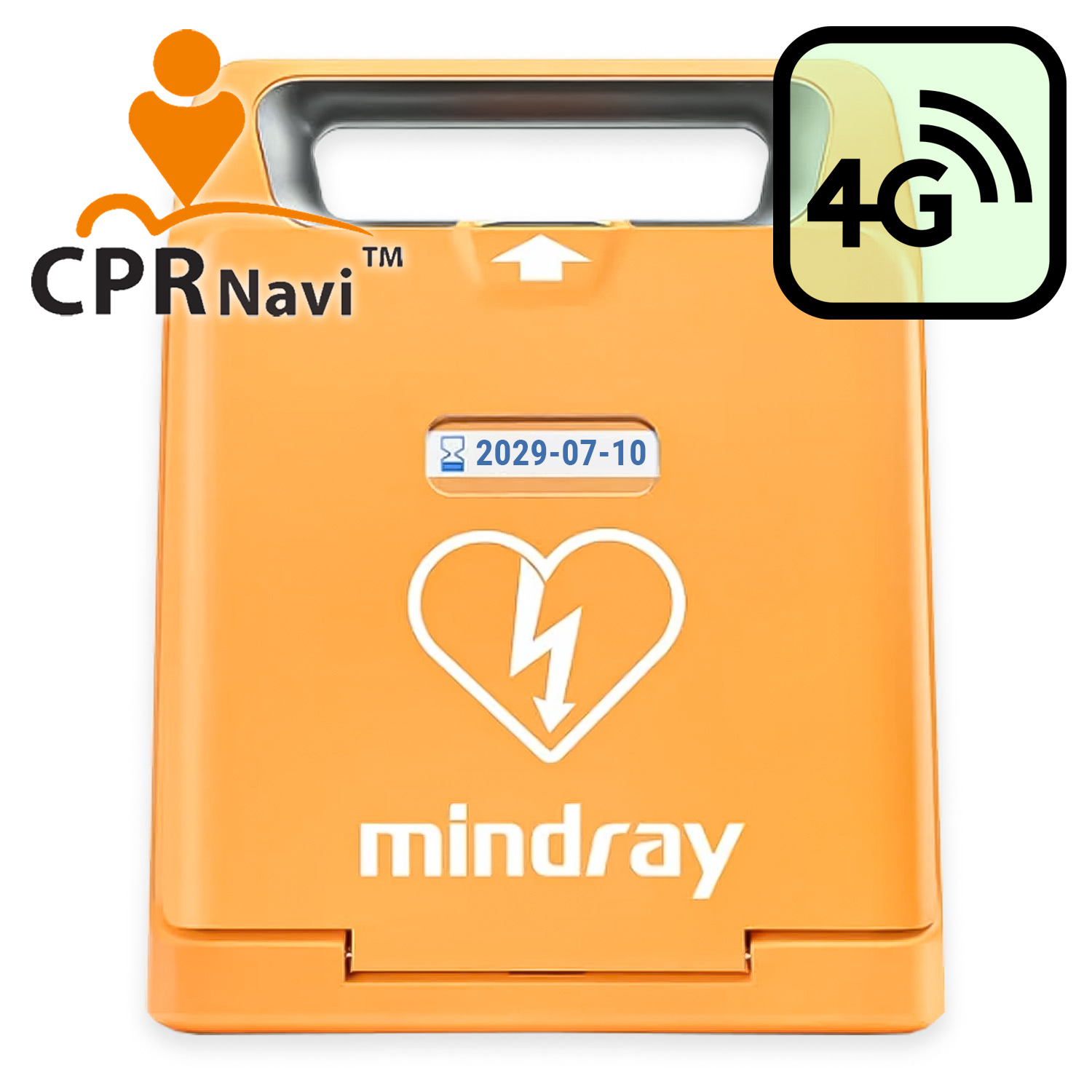
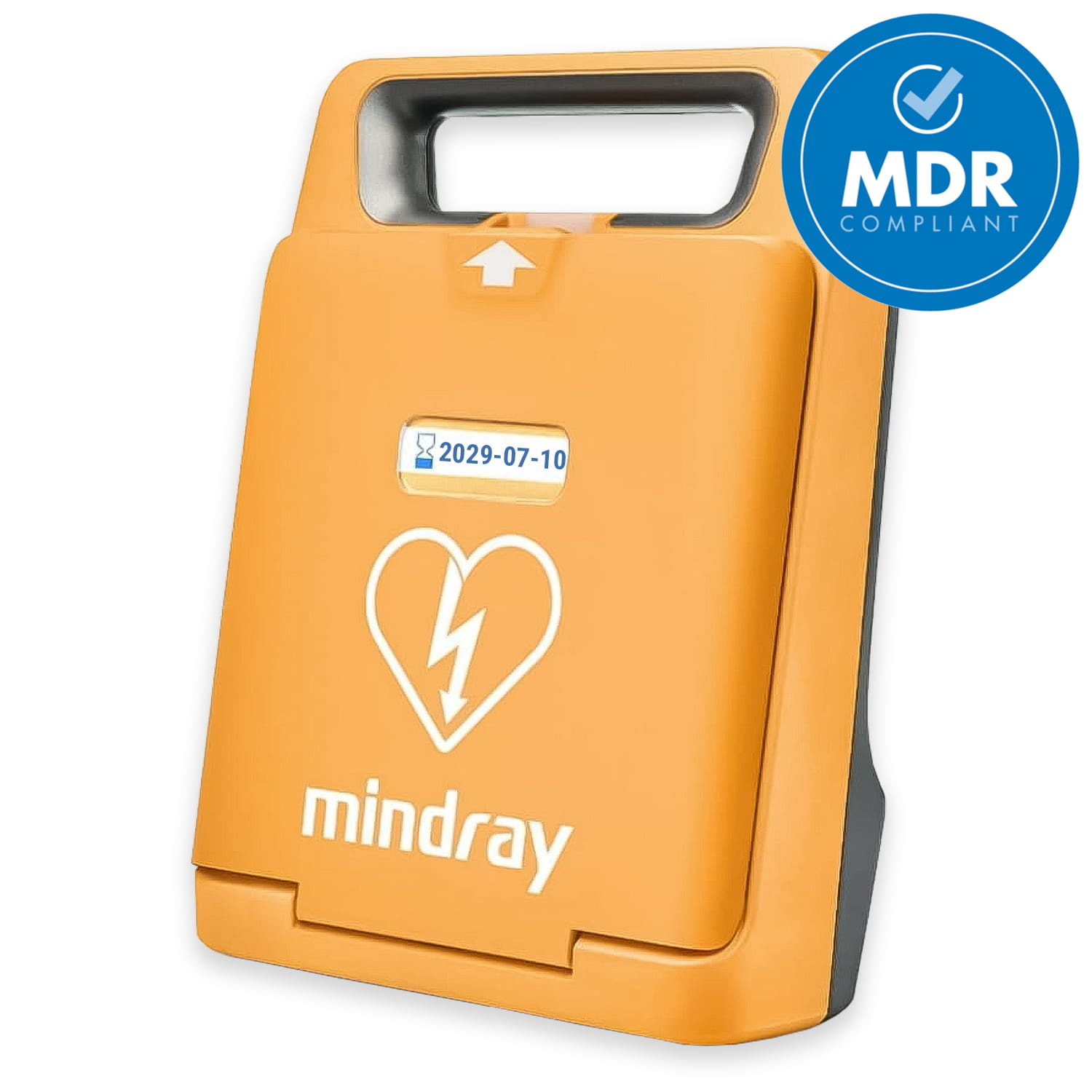
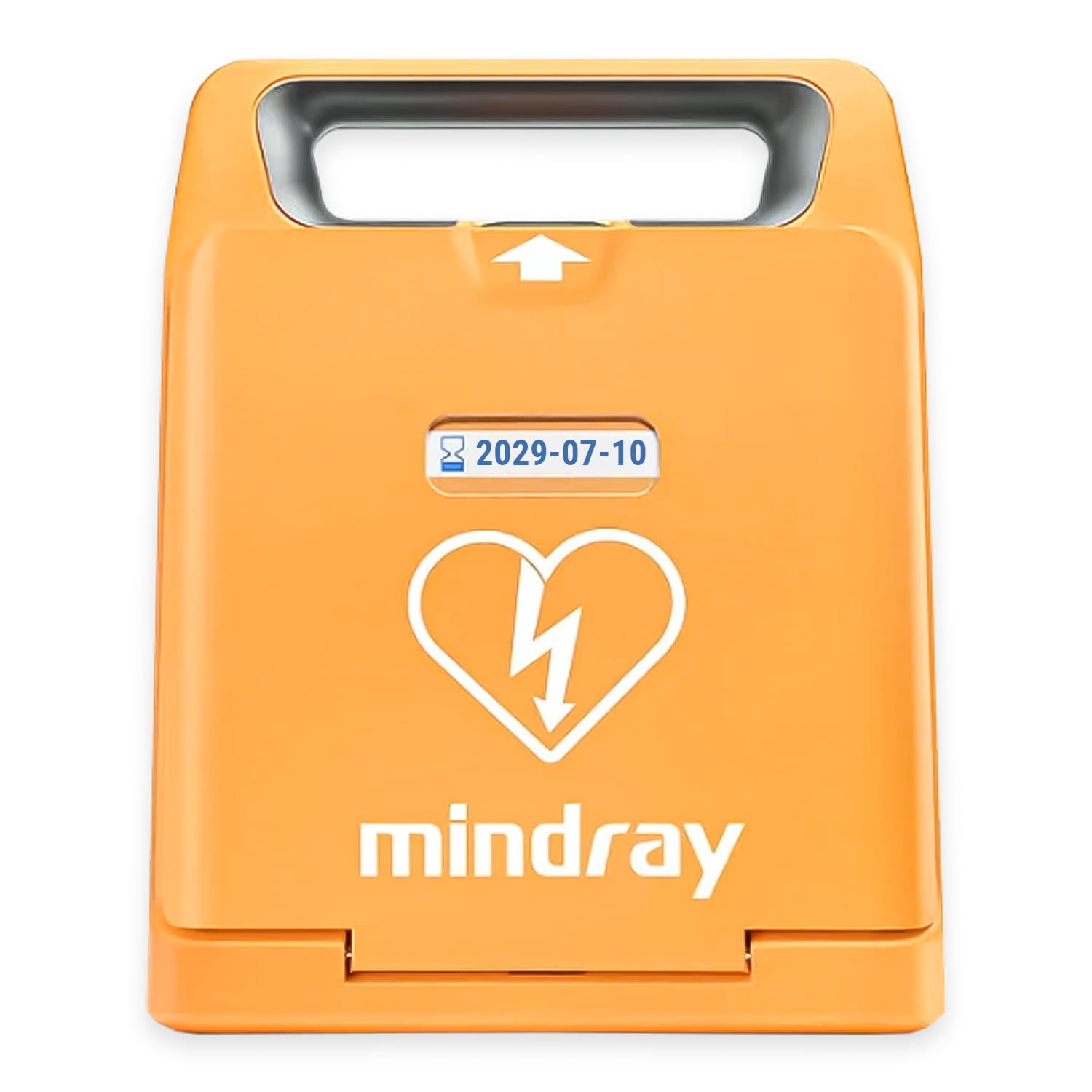
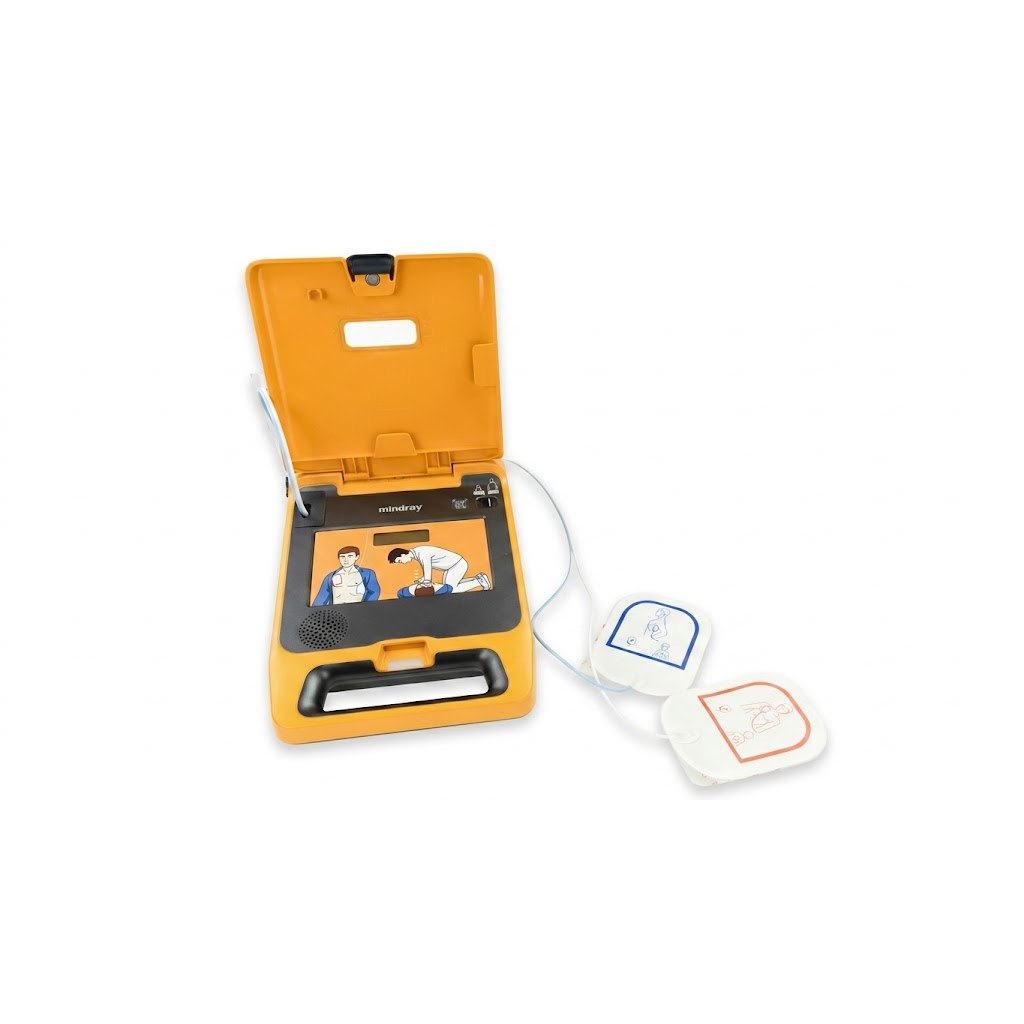
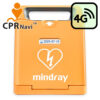
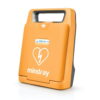
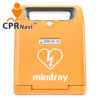
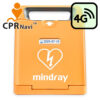
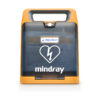
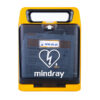
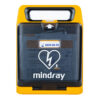
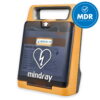
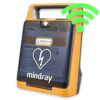
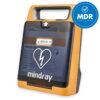
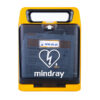
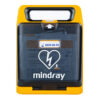
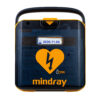
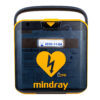
The AED defibrillator Mindray C1A 4G is an external defibrillator with ResQNavi™ technology, which adjusts the pace and the level of instructions to the user. The device analyses the heart rhythm and guides the user with voice prompts; depending on the type, it delivers the shock itself or after the button is pressed. A person with no experience gets full step-by-step instructions, while a trained person gets only the most essential guidance. The device switches on when the cover is opened, and a switch changes the mode from adult to child.
Adult and child electrodes are pre-connected, so you do not need to choose them during the rescue. The language button lets you select one of three pre-configured languages. The defibrillator performs an automatic, daily self-test. In the 4G version, data on its status are sent to the management platform.
Power is supplied by a lithium-manganese battery, and communication with the device is via USB. AED defibrillator Mindray C1A 4G switches on when the cover is opened and immediately guides the user with voice prompts.
Why does the AED defibrillator Mindray C1A 4G suit companies and institutions?
The main difference of this version is 4G management. The device sends information on battery level, electrode status, self-test results and faults to the platform, sends notifications about expiring electrodes and battery replacement, and daily diagnostics can be run remotely.
With several locations, e.g. in office buildings or retail chains, this allows all devices to be monitored centrally. AED defibrillator Mindray C1A 4G performs an automatic, daily self-test, and its result is visible on the management platform.
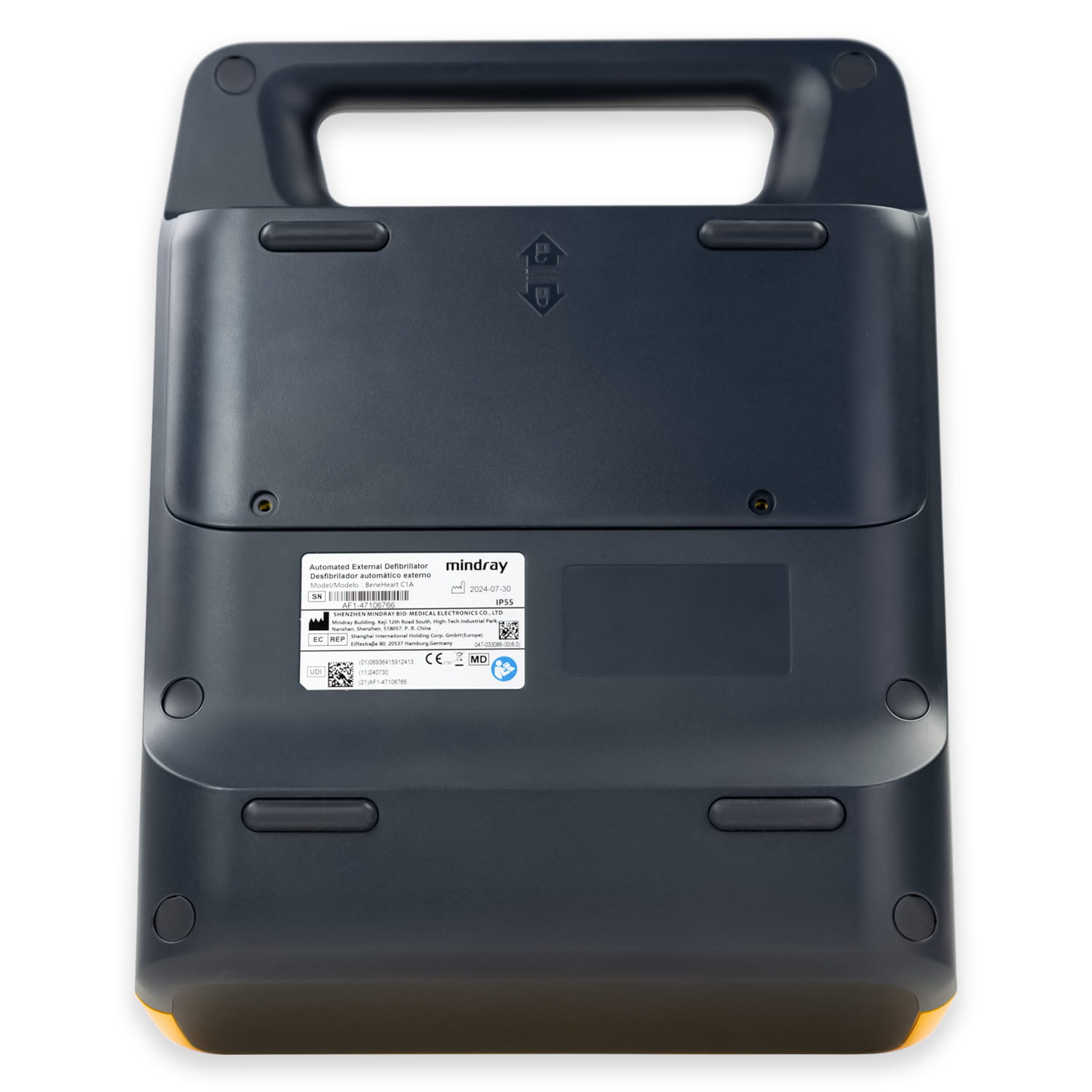
In addition, it offers a biphasic waveform with energy of up to 360 J, IP55 rating and a 1.5 m drop test. You will find other models and accessories in the AED defibrillators. The AED defibrillator Mindray C1A 4G operates at temperatures from -5 °C to 50 °C, and for long-term storage of over 7 days it requires 15 °C to 35 °C.
How do you use a defibrillator during cardiac arrest?
First, assess the safety of the scene, check the casualty's response and breathing, and if there is no normal breathing, call for help on 999 or 112. Ask someone to bring an AED and start chest compressions. A casualty's survival may depend on a bystander taking action. After you open the cover, the device switches on and guides you with voice prompts. For a child, move the switch to child mode. CPR Navi will correct the depth and rate of compressions as you go.
The course of the rescue is described in detail in the article Automated external defibrillator (AED).
Frequently asked questions (FAQ)
How quickly does the defibrillator deliver the first shock?
In under 8 seconds. Switching on takes 2 seconds and ECG analysis 5 seconds; the pulse is charged at the same time as the analysis.
Can it be used on children?
Yes. Adult and child electrodes are pre-connected, and child mode is activated with a switch.
What does the 4G version offer?
The device sends data on the battery, electrodes, self-tests and faults to the management platform and sends notifications about the need to replace components. It also allows diagnostics to be performed remotely.