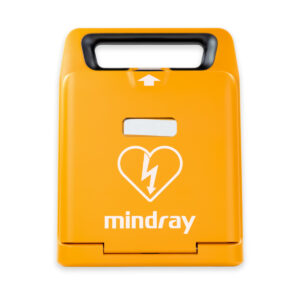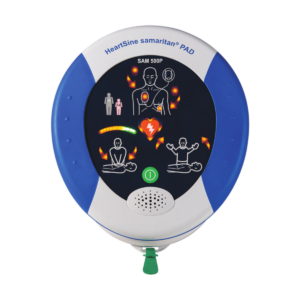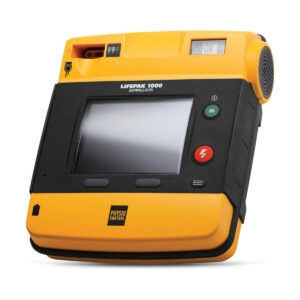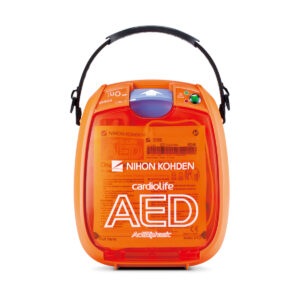
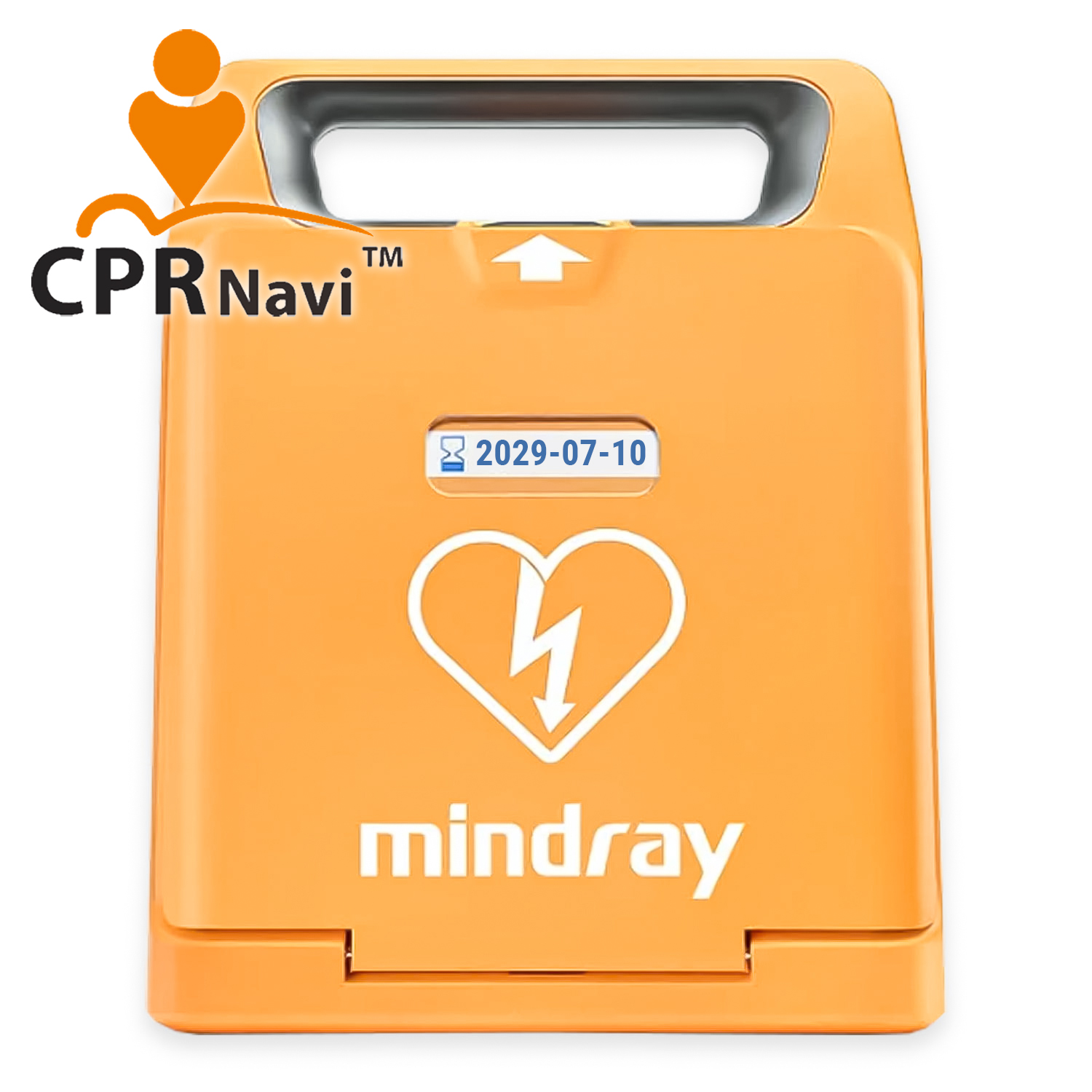
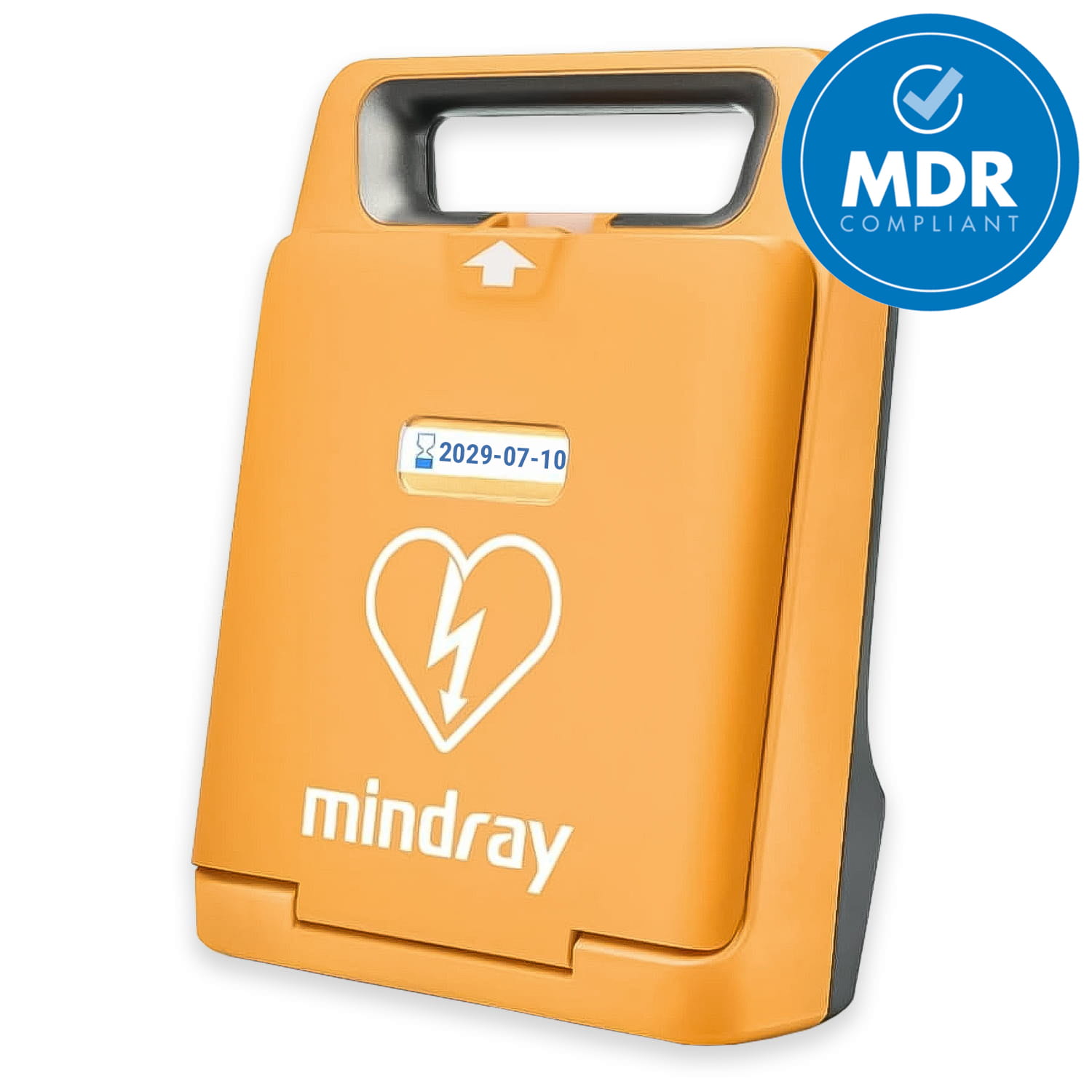
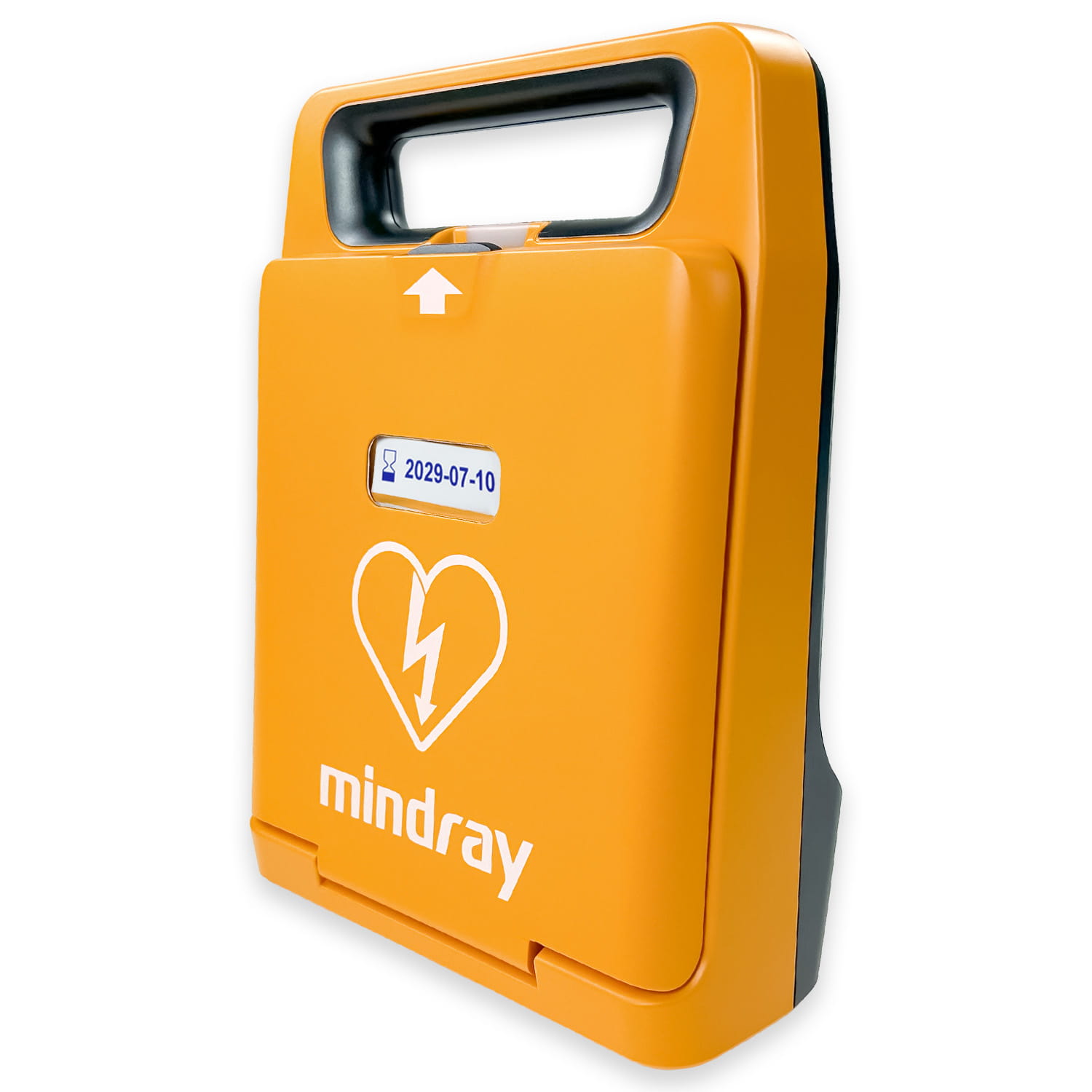
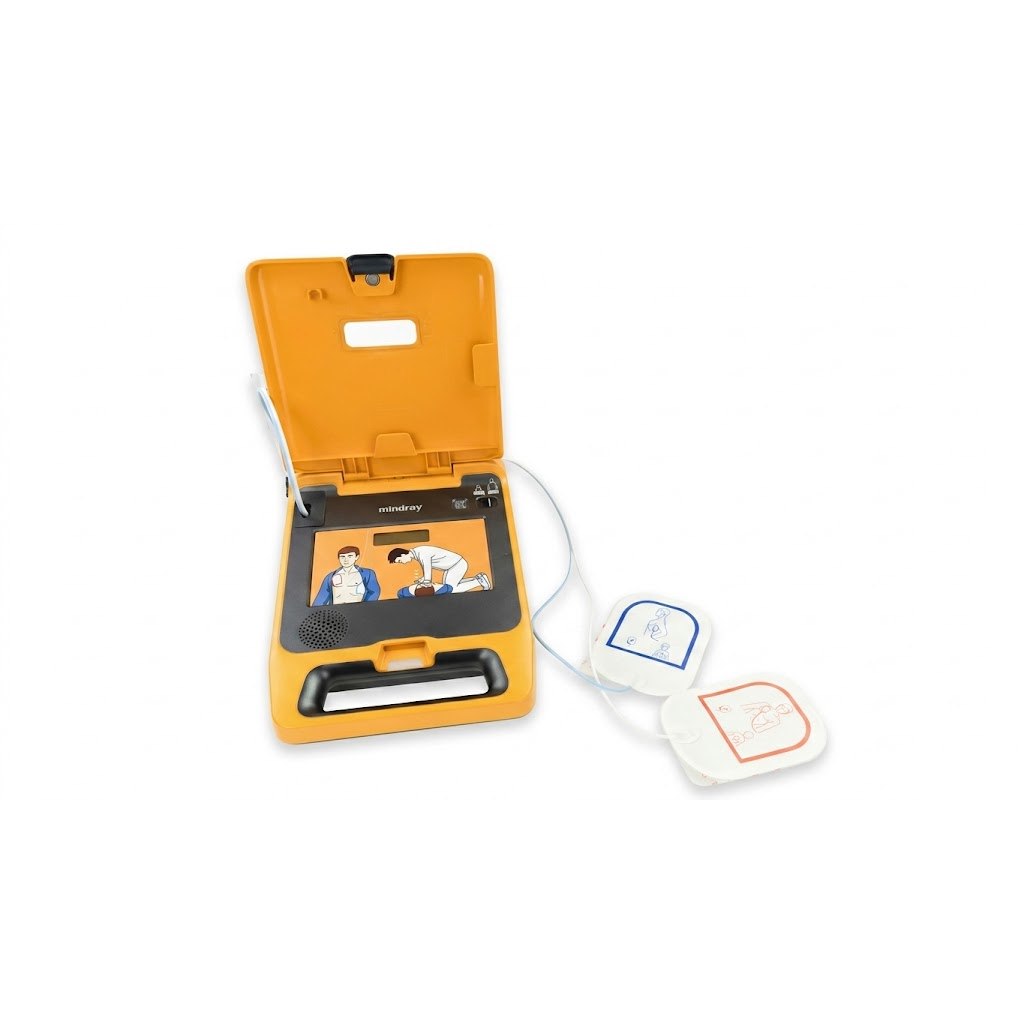
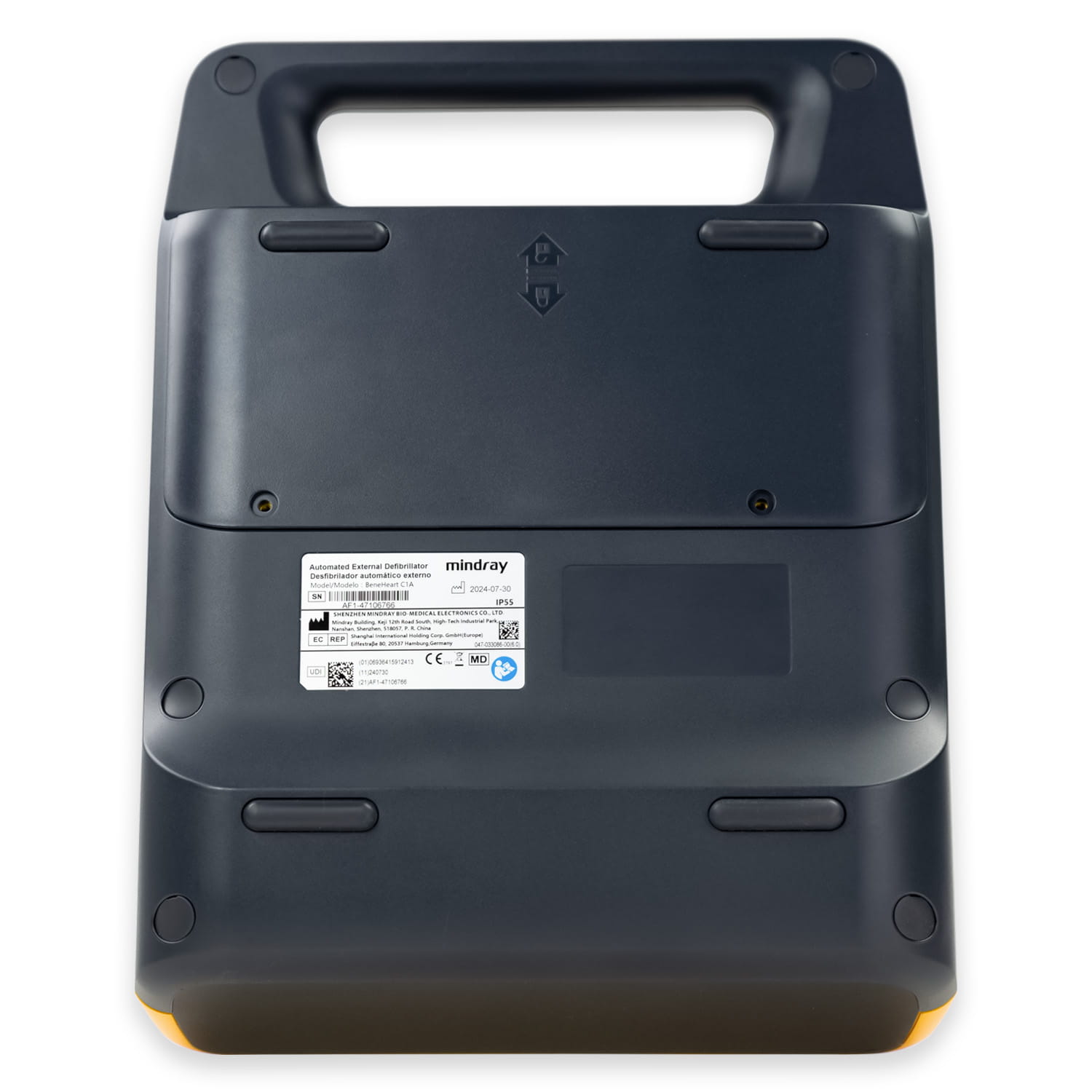
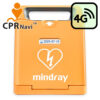
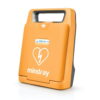
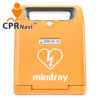
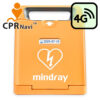
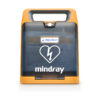
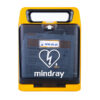
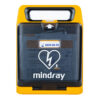
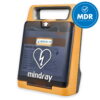
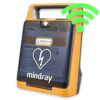
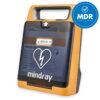
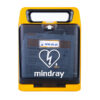
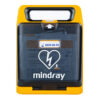
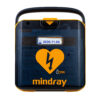
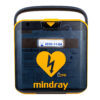
AED defibrillator Mindray BeneHeart C1A is an automatic device for rescuing people in sudden cardiac arrest. It is equipped with the CPR Navi function, which analyses the depth and rate of chest compressions and their rhythm. When compressions are too shallow, too fast or irregular, the device gives voice and visual prompts on what to correct.
ResQNavi™ technology assesses the time spent on individual stages and adjusts the pace and level of instructions to the user. A person without medical experience receives full guidance, while a professional receives only the essentials. Opening the lid switches the power on. A switch changes between adult and child mode, and the language button allows you to select one of up to three pre-configured languages. The device uses a biphasic waveform with energy of up to 360 J.
The defibrillator is intended for companies, public offices, schools and other places where it is to be available in case of sudden cardiac arrest. Power is supplied by a lithium-manganese battery, and communication with the device is via USB. AED defibrillator Mindray BeneHeart C1A has a language button that allows you to select from up to three pre-configured languages.
Why choose the AED defibrillator Mindray BeneHeart C1A?
The device delivers the first shock in less than 8 seconds. Start-up takes two seconds, and the ECG analysis takes five seconds and runs at the same time as the pulse is charging. A daily automatic self-test checks that the device is ready for use, and the battery and electrodes have a service life of 5 years from the production date. AED defibrillator Mindray BeneHeart C1A weighs 2 kg and its dimensions are 21 x 28.6 x 7.8 cm.
The housing meets the IP55 standard and has passed a 1.5 m drop test. The operating temperature range is from -5 °C to 50 °C. For long-term storage (more than 7 days), the recommended range is from 15 °C to 35 °C. You can find other models in the AED defibrillatorscategory. Thanks to the CPR Navi function, the AED defibrillator Mindray BeneHeart C1A gives voice and visual prompts on how to improve chest compressions.
How to use an AED in sudden cardiac arrest?
First, assess the safety of the scene and check the casualty's condition. If the casualty does not respond and is not breathing normally, call for help on 999 or 112 and ask someone to bring a defibrillator. Start chest compressions until it arrives. A bystander taking action can decide whether the casualty survives.
After the lid is opened, the device switches on and guides the user with voice prompts. For a child, use the switch. During compressions, follow the CPR Navi guidance on depth and rate. A detailed course of action is described in the article Automated external defibrillator (AED).
Frequently asked questions (FAQ)
Can the defibrillator be used on a child?
Yes. The device has an adult/child mode switch, and the adult and child electrodes are pre-connected.
How long do the battery and electrodes last?
The battery and electrodes have a service life of 5 years from the production date. A daily automatic self-test checks that the device is ready.
In what conditions can the device be used?
The operating temperature range is from -5 °C to 50 °C, and the housing meets the IP55 standard. The device has been tested for drops from a height of 1.5 m.